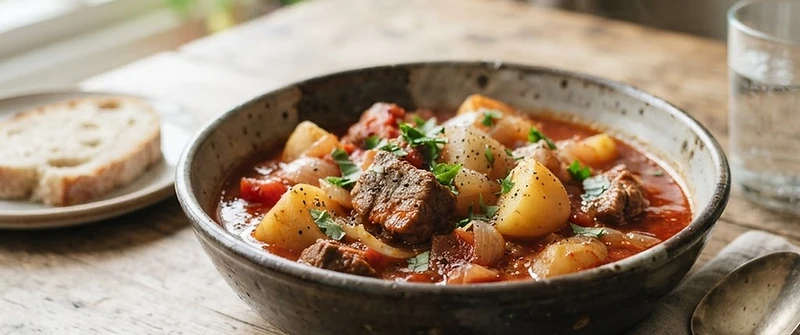
Tomatie Bredie
A Cape slow-stew of lamb and tomato — the simplest and best of the bredie family.
Ideal stay
Best for
Our take
This is the definitive Cape comfort dish, a slow-cooked marriage of lamb and tomato that rewards patience. It is soulful, unpretentious, and deeply rooted in the history of the Cape Malay kitchen.
This is the definitive Cape comfort dish, a slow-cooked marriage of lamb and tomato that rewards patience. It is soulful, unpretentious, and deeply rooted in the history of the Cape Malay kitchen.
- Ideal Stay
- Two to three hours for a relaxed, traditional lunch.
- Best For
- slow-cooked lamb, Cape Malay heritage, winter comfort, authentic home-style cooking
- Skip If
- quick lunches, vegetarians, diners seeking fast-food convenience
- Go If
- You are a traveller seeking authentic, slow-cooked heritage food and you have the patience to wait for a kitchen that prepares dishes properly rather than rushing for the tourist trade.
Why it's worth your time
A bredie is a Cape slow-stew, and the tomato version is the purest of the family — lamb and tomato cooked down until they melt into each other. It comes from the Cape farm kitchen and the Cape Malay pot, built on the Dutch stew tradition made local. It's a home dish, rarely on restaurant menus, which is the loss. Find a Winelands farmstay that serves it, or a Cape Malay home that cooks it; it rewards the wait.
What we love
The way the dish relies on the slow reduction of tomatoes and rendered lamb fat rather than added water. This creates a concentrated, umami-rich gravy that clings to the meat and potatoes, offering a depth of flavour that standard stews simply cannot replicate.
What to know
This is a home-cooked dish, not a restaurant standard. You will rarely find it on a menu in a city centre. Look for it in Winelands farmstays or dedicated Cape Malay eateries. It is almost always better the next day, so if you find a place that serves it, ask if it was prepared recently.
The full guide
The Essence of the Dish
A proper tomato bredie is a study in patience. It is a slow-braised stew of lamb, typically using fattier cuts like neck or knuckles, cooked down with tomatoes until the meat falls from the bone and the sauce thickens into a rich, dark gravy. The dish is defined by its Cape Malay roots, which means it is seasoned with a specific blend of warm spices including cinnamon, ginger, cloves, and a touch of chilli. Unlike a standard stew, it is not meant to be soupy. The liquid comes entirely from the tomatoes and the rendered fat of the meat, creating a concentrated flavour profile that is both sweet and savoury. It is a dish that demands a long, slow simmer to allow the flavours to meld completely.
Setting and Service
This is not a dish for a hurried meal. It belongs in a setting that values the tradition of the Cape farm kitchen or the warmth of a family home. It is traditionally served over a bed of fluffy white rice, often turmeric-yellow funeral rice, which acts as the perfect vessel for the thick, spiced gravy. Because the dish is so hearty, it requires very little in the way of sides; a simple green salad or a few slices of crusty bread to mop up the sauce are sufficient. Pair it with a glass of local red wine from the Western Cape, which stands up well to the richness of the lamb and the acidity of the tomatoes.
Finding the Real Thing
Do not expect to walk into a random restaurant and find this on the menu. It is a labour-intensive dish that is increasingly rare in commercial kitchens. Your best chance of encountering it is to seek out small, family-run Cape Malay establishments or farm-to-table venues in the Winelands that focus on heritage recipes. If you are staying in a guesthouse, ask the hosts if they can prepare it for a Sunday lunch. When ordering, do not be afraid to ask if the kitchen uses lamb bones, as the marrow adds essential depth. If you see it on a menu, order it without hesitation, but be prepared for a wait. If the kitchen offers it as a special, it is almost certainly worth the time.
Before you book
Questions Tomatie Bredie always raises
- Is tomato bredie a spicy dish?
- It is aromatic rather than hot. The Cape Malay influence introduces warm spices like cinnamon, ginger, and cloves, which provide a deep, complex flavour. While a touch of chilli is often included for balance, it should not be an aggressively spicy dish.
- Can I find tomato bredie in Cape Town restaurants?
- It is not a standard menu item in most city restaurants. You are much more likely to find it in the Bo-Kaap or at specific Cape Malay eateries that specialise in traditional heritage cooking. Always check the menu or call ahead to confirm availability.
- What is the difference between a bredie and a regular stew?
- A bredie is a specific type of slow-braised dish where the vegetables and meat are cooked down until they almost melt together. Unlike many stews, it is not meant to be watery; it relies on the reduction of juices and fat to create a thick, flavourful sauce.
- Should I eat it with anything else?
- It is traditionally served over plain white rice or yellow rice. The rice is essential to soak up the rich, spiced gravy. A simple side salad or fresh bread is all you need to complete the meal.
More dish in Western Cape

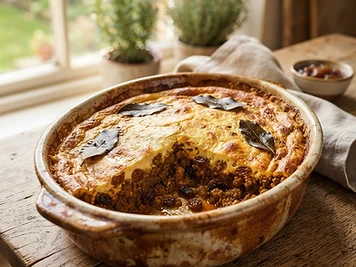
Bobotie
Cape Malay spiced minced meat baked with a savoury egg-custard top — South Africa's most famous home dish.


Gatsby
A long Cape Town submarine sandwich — a full loaf loaded with curry-slathered chips, meat and salad.


Koeksister
A plaited or ball-shaped doughnut, fried and drenched in syrup — two versions: the Cape Malay spiced ball and the Afrikaner plaited crisp.

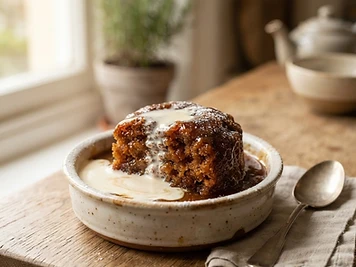
Malva Pudding
A baked, sticky sponge of apricot jam and butter, served hot with custard — the Cape's national dessert.


Melktert (Milk Tart)
A Cape custard tart dusted with cinnamon — soft, barely sweet, and the country's most-baked tart.

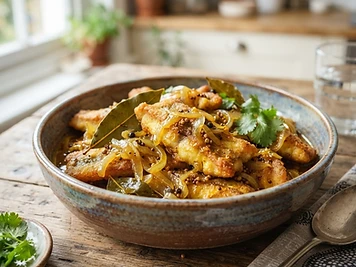
Pickled Fish
A Cape spiced pickled fish — snoek or hake in a turmeric-onion vinegar — the Easter dish of the Cape.