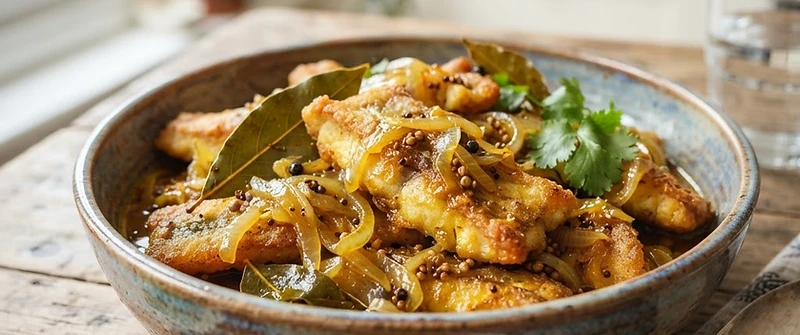
Pickled Fish
A Cape spiced pickled fish — snoek or hake in a turmeric-onion vinegar — the Easter dish of the Cape.
Ideal stay
Best for
Our take
This is a sharp, golden, and deeply comforting Cape staple. It is a masterclass in balancing acidity with spice, turning humble fish into a dish that defines the rhythm of the Western Cape’s Easter weekend.
This is a sharp, golden, and deeply comforting Cape staple. It is a masterclass in balancing acidity with spice, turning humble fish into a dish that defines the rhythm of the Western Cape’s Easter weekend.
- Ideal Stay
- 30 to 60 minutes for a meal
- Best For
- Easter weekend traditions, Cape Malay culinary history, cold, tangy, spiced seafood
- Skip If
- diners seeking hot, freshly prepared seafood, those sensitive to vinegar
- Go If
- You are visiting the Western Cape during the Easter period and want to participate in a genuine local tradition that bridges cultural and religious lines through a shared, time-honoured meal.
Why it's worth your time
A Cape Malay Easter dish — cold spiced fish, snoek or hake, in a turmeric-and-onion vinegar sauce. It began as a way to preserve fish through the long Easter weekend when no cooking was done, and it's now inseparable from the holiday in Cape Malay homes. The sauce should be sharp and golden; the fish should still hold its texture. You'll find it at Bo-Kaap tables and Cape Town fish markets in Easter week, and you can ask for it at Bo-Kaap Kombuis out of season.
What we love
The patience required to make it right. The fish must sit in the curried vinegar and onion sauce for at least two days, allowing the flavours to penetrate the flesh while the onions retain a necessary, sharp crunch that provides the perfect textural contrast to the tender, flaked fish.
What to know
It is a cold dish. Do not expect it to be heated up. It is traditionally served with fresh white bread or hot cross buns to soak up the excess sauce. While it is ubiquitous during Easter, you can find it at specific Cape Malay establishments year-round if you know where to ask.
The full guide
The flavour profile
The dish consists of firm, white fish like snoek or hake that has been fried until golden and then submerged in a rich, curried pickling sauce. The sauce is the heart of the experience, relying on a precise balance of vinegar, sugar, turmeric, and curry powder. It should be sharp, tangy, and mildly spiced, never overwhelming the palate with heat. The onions are a critical component, sliced into rings and cooked just enough to remain slightly crunchy before they are left to soften in the acidic marinade. When prepared correctly, the fish holds its texture, absorbing the aromatic spices while the vinegar cuts through the richness of the fried coating. It is a dish defined by its ability to improve with time, as the flavours deepen the longer the fish rests in the liquid.
Serving and tradition
Pickled fish is almost exclusively served cold, straight from the refrigerator. The setting is typically informal, often part of a family gathering or a picnic. The essential accompaniment is bread. Whether you choose a thick slice of fresh, crusty white bread or a toasted hot cross bun, the goal is to use the bread to mop up the golden, vinegar-soaked onions and the remaining sauce. Some prefer a side of garden salad to add freshness, but the bread is non-negotiable. It is a communal food, meant to be shared from a large bowl or container. Because it was historically a method of preservation, it remains a dish that celebrates the intersection of Dutch pickling techniques and the spice-heavy traditions brought to the Cape by enslaved people from Indonesia and India.
Meeting the dish
If you are in Cape Town during the lead-up to Easter, you will see the dish everywhere, from supermarket shelves to local fish markets. For a more authentic experience, look for it in the Bo-Kaap, where the Cape Malay influence is strongest. If you are visiting outside of the Easter season, you will need to seek out specific restaurants that specialise in traditional Cape Malay cuisine, as it is not a standard menu item in most mainstream eateries. When ordering, do not ask for it to be warmed up; it is served chilled by design. If you are buying it from a market, check that the fish looks firm and the sauce is bright and golden. Avoid any version where the fish appears mushy or the sauce looks dull and overly oily.
Before you book
Questions Pickled Fish always raises
- Is pickled fish supposed to be served hot?
- No. It is a cold dish that is meant to be served chilled after marinating for at least two days. Heating it will ruin the texture of the fish and the balance of the vinegar-based sauce.
- Why is it eaten specifically at Easter?
- It originated as a practical way to preserve fish for the long Easter weekend when many people abstained from eating meat. Over time, it became a deeply ingrained cultural tradition in the Western Cape, transcending religious boundaries.
- What kind of fish is used?
- Traditionally, firm white fish like snoek or hake are used. These varieties are chosen because they hold their shape well during the frying process and do not fall apart when submerged in the acidic pickling liquid for several days.
- Can I find it outside of the Easter season?
- Yes, though it is less common. You can find it year-round at specialized Cape Malay restaurants or through local cooking tours in areas like the Bo-Kaap. It is not typically found on standard restaurant menus outside of the Easter period.
More dish in Western Cape

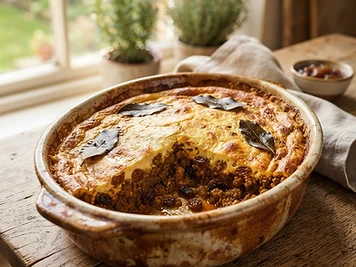
Bobotie
Cape Malay spiced minced meat baked with a savoury egg-custard top — South Africa's most famous home dish.


Gatsby
A long Cape Town submarine sandwich — a full loaf loaded with curry-slathered chips, meat and salad.

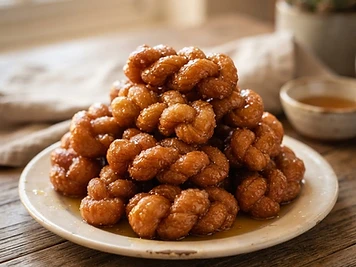
Koeksister
A plaited or ball-shaped doughnut, fried and drenched in syrup — two versions: the Cape Malay spiced ball and the Afrikaner plaited crisp.

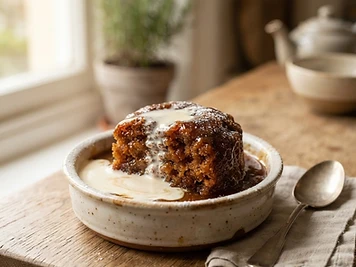
Malva Pudding
A baked, sticky sponge of apricot jam and butter, served hot with custard — the Cape's national dessert.

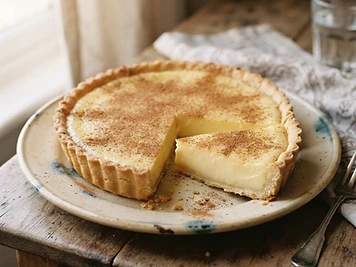
Melktert (Milk Tart)
A Cape custard tart dusted with cinnamon — soft, barely sweet, and the country's most-baked tart.

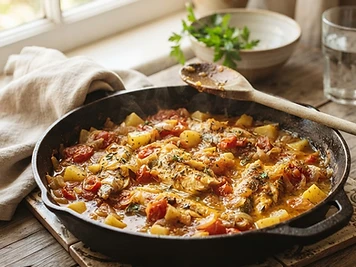
Smoorsnoek
A stew of smoked snoek (a local fish) with potato, tomato and onion — a Cape West Coast classic.