Melktert (Milk Tart)
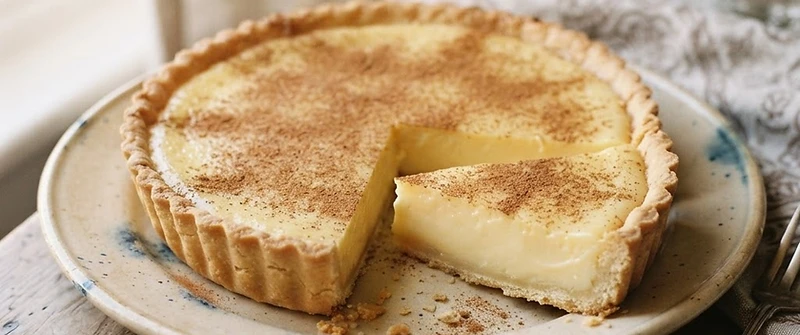
A Cape custard tart dusted with cinnamon — soft, barely sweet, and the country's most-baked tart.
Ideal stay
Best for
Our take
Melktert is a humble, essential South African comfort food. It is a delicate, barely sweet custard tart that relies on a high milk-to-egg ratio and a generous dusting of cinnamon to achieve its signature, nostalgic profile.
Melktert is a humble, essential South African comfort food. It is a delicate, barely sweet custard tart that relies on a high milk-to-egg ratio and a generous dusting of cinnamon to achieve its signature, nostalgic profile.
- Ideal Stay
- 30 to 60 minutes, including the time to sit and enjoy.
- Best For
- afternoon tea, farm stall snacks, authentic local flavour, simple comfort
- Skip If
- fine dining, sugar-seekers, those requiring firm, cake-like textures
- Go If
- You are seeking an authentic taste of local heritage at a farm stall or community bakery. It is the perfect, low-key accompaniment to a mid-morning coffee or a traditional afternoon tea break.
Why it's worth your time
Milk tart comes straight from the Cape Dutch settlers of the 17th century, a descendant of Dutch custard tarts made local with cinnamon. A buttery crust holds a wobbly milk-custard filling dusted with cinnamon — barely sweet, which is the point. It's the country's most-baked tart and shows up at every braai, funeral, and farm-stall counter. The best slice is a fresh, still-wobbly one at a farm stall or Bo-Kaap bakery, not the supermarket slab.
What we love
The restraint in the sugar levels is what makes this dish work. Unlike many modern desserts that rely on cloying sweetness, melktert prioritises the clean, creamy flavour of fresh milk. The cinnamon dusting provides a warm, aromatic contrast that elevates the simple custard into something genuinely memorable.
What to know
The temperature at which you eat it changes the experience entirely. While some prefer it chilled for a clean slice, serving it ice-cold flattens the cinnamon aroma. Aim for room temperature to allow the custard to soften and the spice to bloom. If you buy it from a fridge, let it sit for a while before eating.
The full guide
The Anatomy of the Tart
A proper melktert is defined by its filling. It is a custard, not a cake, made primarily from milk, eggs, and a thickening agent like flour or cornflour. The ratio of milk to egg is high, which gives the tart its characteristic light, wobbly texture. The crust varies by household and region; you will encounter traditional short-crust pastry, buttery shortbread, or even modern puff pastry. Regardless of the base, the filling should be smooth and creamy, never rubbery or overly dense. The final touch is a generous, even dusting of ground cinnamon applied once the surface has cooled enough to prevent blotching. This spice is not merely a garnish but a fundamental aromatic component that balances the richness of the dairy.
Finding the Real Version
You will find melktert everywhere in South Africa, from church bazaars and home industries to supermarket shelves. Avoid the temptation of the supermarket slab, which is often mass-produced and lacks the necessary texture. Instead, look for small, independent bakeries or farm stalls in the Western Cape where the tart is baked fresh daily. These versions are often still slightly warm or have been set properly without the use of excessive stabilisers. If you are in the Bo-Kaap or visiting rural farm stalls, you are in the right place. Ask if the tart was made on-site. A good sign is a slightly uneven, handmade appearance rather than the uniform, perfect edges of a factory-made product. If the custard looks too stiff or gelatinous, keep looking.
Serving and Etiquette
Melktert is a casual affair. It is rarely served as a formal plated dessert in high-end restaurants, but rather as a treat with coffee or Rooibos tea. When ordering, do not expect a warm, oozing mess unless you are at a place that specifically prepares it that way; most high-quality versions are served at room temperature to ensure the custard has set correctly. Use a thin, dry knife to cut your slice, wiping the blade between cuts to keep the edges clean. If you are served a slice that has been refrigerated, be patient. Let it sit on the table for ten minutes. This allows the custard to lose its chill and the cinnamon to release its fragrance, which is essential for the full experience.
Before you book
Questions Melktert (Milk Tart) always raises
- Is melktert supposed to be served hot or cold?
- It is best served at room temperature. While some people enjoy it chilled, the cold temperature masks the delicate flavour of the cinnamon and makes the custard feel too firm. If it has been in the fridge, let it sit out for a while before you eat it.
- What is the difference between a crustless and a traditional melktert?
- A traditional melktert uses a pastry shell to hold the custard, providing a buttery crunch that contrasts with the soft filling. A crustless version is essentially a baked milk pudding. Both are authentic, but the crustless variety is often a simpler, more rustic home-baking shortcut.
- Why is my melktert filling runny?
- A runny filling usually means the custard was not cooked long enough or the ratio of thickening agent to milk was too low. It requires patience and constant stirring over gentle heat to ensure the flour or cornflour fully activates and the eggs thicken the mixture properly.
- Can I find melktert outside of the Western Cape?
- Yes, it is a national staple found across South Africa. While it has deep roots in the Cape Dutch tradition of the Western Cape, you will find it in bakeries, farm stalls, and homes in every province. It is a ubiquitous part of the country's culinary landscape.
More dish in Western Cape

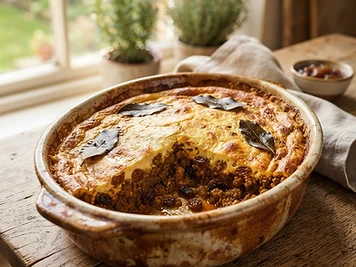
Bobotie
Cape Malay spiced minced meat baked with a savoury egg-custard top — South Africa's most famous home dish.


Gatsby
A long Cape Town submarine sandwich — a full loaf loaded with curry-slathered chips, meat and salad.

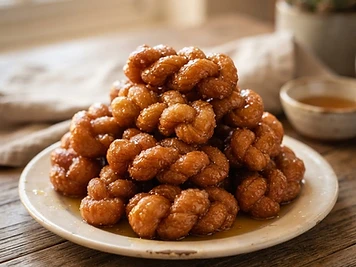
Koeksister
A plaited or ball-shaped doughnut, fried and drenched in syrup — two versions: the Cape Malay spiced ball and the Afrikaner plaited crisp.

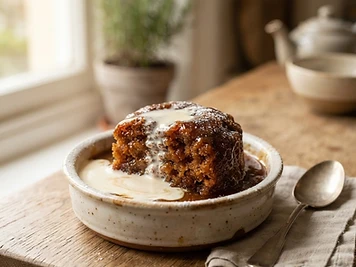
Malva Pudding
A baked, sticky sponge of apricot jam and butter, served hot with custard — the Cape's national dessert.

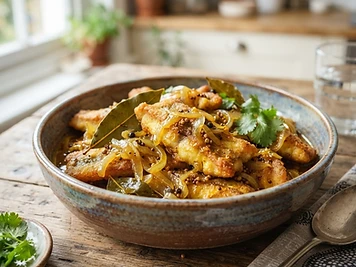
Pickled Fish
A Cape spiced pickled fish — snoek or hake in a turmeric-onion vinegar — the Easter dish of the Cape.

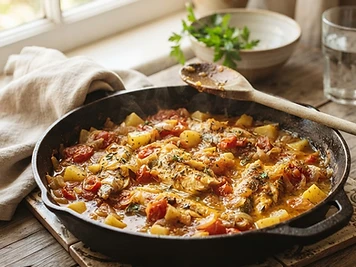
Smoorsnoek
A stew of smoked snoek (a local fish) with potato, tomato and onion — a Cape West Coast classic.