Namaqua National Park
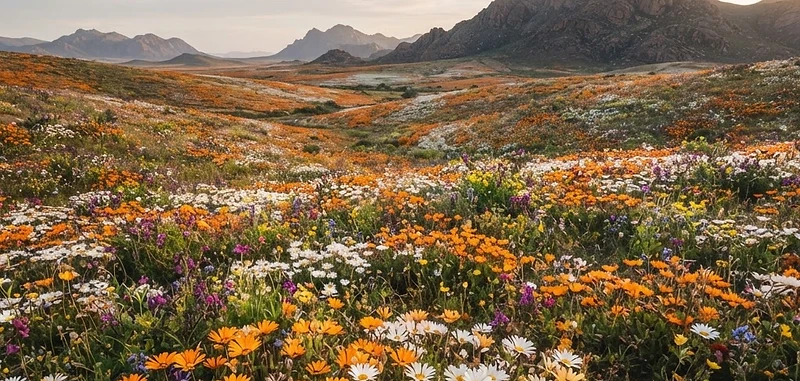
The wildflower reserve that carpets the semi-desert in spring — one of the world's great blooms.
Trip Role
Ideal stay
Best for
Our take
A seasonal spectacle that demands patience and a keen eye for the small details.
A seasonal spectacle that demands patience and a keen eye for the small details.
- Trip Role
- Only If Nearby
- Ideal Stay
- 2 days
- Time Needed
- 2-3 days
- Best For
- Botanical enthusiasts and spring photography.
- Go If
- Visit between August and September to witness the world-famous wildflower blooms.
Why it's worth your time
This park protects a vast arid landscape that undergoes a dramatic transformation during the spring wildflower season. It is a biodiversity hotspot known for its bulb flora and rugged coastal sections.
What we love
The sudden carpet of daisies across the dusty plains — orange and white, and gone within weeks of a good rain.
What to know
The park is remote; ensure your vehicle is reliable and check gate times for the coastal sections.
The full guide
What it is like
Namaqua National Park is an arid landscape of vast, exposed horizons that feel indifferent to human presence. The terrain consists of rolling hills and sandy plains that appear harsh and monochromatic for the majority of the year. When you first enter, the silence is heavy and the sunlight is aggressive, reflecting off rocks and dry scrub with little to soften the glare. This is not a lush green park where foliage provides shade or covers the scale of the surroundings. Instead, it is an expansive space where the ground dominates your attention.
The park undergoes a radical transformation when the spring rains arrive. The dust is briefly replaced by a dense, suffocating carpet of daisies. The transition from a barren, stony desert to a vibrant orange and white floral display is disorienting. Unlike neighbouring reserves that focus on thick bushveld or dense riverine growth, Namaqua relies on these small, bulb-based flora to define its character. The scale is massive, making it easy to feel small and entirely isolated from the rest of the world during your first hour of driving.
Wildlife, realistically
If you arrive here expecting to see lions, elephants, or buffalo, you will leave feeling cheated. This is not a traditional safari destination, and it does not attempt to replicate the wildlife density found in the eastern provinces. You will see small desert-adapted antelope and, if you are lucky, perhaps a caracal or a jackal stalking through the scrub. Sightings are erratic and require significant patience. The biodiversity is heavily skewed toward reptiles, insects, and the bulb flora that anchors the ecosystem.
Most wildlife sightings concentrate near the sparse water sources or the coastal section of the park. Even then, the animals are shy and often disappear into the rocky outcrops at the first sign of a vehicle. Predators are genuinely hard to find because the terrain offers too many hiding spots and too little prey to sustain large, visible populations. You are here to look at the ground and the horizon, not to tick off a list of charismatic megafauna. Adjusting your expectations before you enter the park is the only way to avoid deep disappointment.
How a visit works
The logistics of a visit are simple but unforgiving. The park is designed primarily for self-drive enthusiasts who prefer to navigate the dusty roads at their own pace. There is no infrastructure here to hold your hand, so your vehicle must be mechanically sound and capable of handling rough, sandy tracks. Gate times for the coastal sections are strict and non-negotiable, meaning you must plan your route with care to avoid being stranded after dark.
One night is rarely enough to grasp the landscape, but four nights might be too many unless you are a dedicated botanist. Two full days allows you enough time to explore the inland plateau and reach the coastline without feeling rushed. You should shape your day around the light, as the midday sun washes out the colour of the flowers and makes photography difficult. There are no guided game drives that offer the security of an expert, so your experience depends entirely on your ability to navigate, observe, and respect the remoteness of the Northern Cape.
When to go
Choosing when to visit is an exercise in compromise. The period between August and September is the only time the park offers the world-famous wildflower bloom. During these weeks, the park is crowded, and the coastal sections can feel busy with photographers and tourists chasing the perfect shot. You will pay a premium for accommodation and find the roads busier than they are for the rest of the year. The weather is unpredictable, shifting from pleasant warmth to bitter, biting wind in a matter of hours.
Visiting outside of the spring window is a different experience entirely. You will find solitude and low prices, but you will also encounter a park that is grey, dusty, and largely devoid of the colour that makes it famous. If you visit in the heat of summer, the temperatures are exhausting and the glare is blinding. If you visit in winter, the nights are freezing and the landscape is dormant. The trade-off is always between the floral spectacle and the harsh reality of an empty, arid desert.
Who it suits, who it does not
This park rewards the patient traveller who finds beauty in subtle, small-scale details. If you are a botanical enthusiast or a photographer who understands how to work with light and composition in a desert environment, you will find this place rewarding. It suits people who prefer silence and isolation over the social atmosphere of a tourist-heavy safari lodge. It also suits the self-sufficient visitor who enjoys the challenge of driving through remote and unforgiving terrain.
This destination will frustrate anyone looking for a conventional safari experience. If you require lush scenery, comfortable lodge amenities, or the guaranteed sightings of Big Five game, you are looking at the wrong map. For those who want the classic South African wildlife experience, the alternative is to head toward the reserves in the Lowveld or the Eastern Cape. Namaqua is a specific, niche destination for a specific type of traveller, and it makes no effort to be anything else.
More national park in Northern Cape

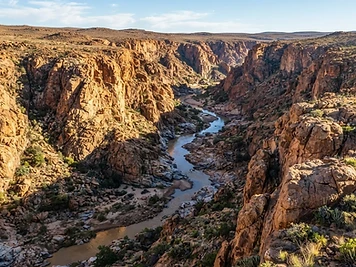
Augrabies National Park
Arid park on the Orange River, centred on the Augrabies Falls where the river plunges into a granite gorge.

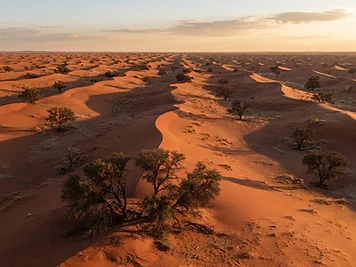
Kgalagadi Transfrontier Park
Vast red-dune Kalahari shared with Botswana — desert black-maned lions, gemsbok, and cheetah across the dry riverbeds.

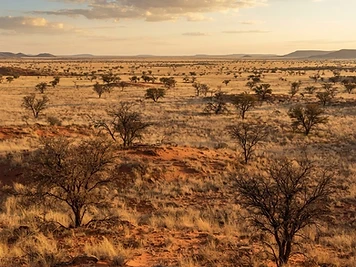
Mokala National Park
Kimberley's malaria-free park — roan, sable and tsessebe alongside the Big Five in acacia savanna.

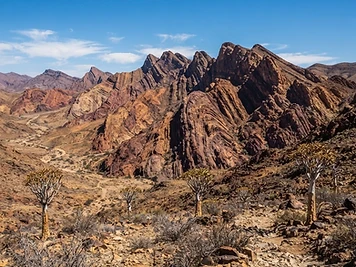
Richtersveld National Park
Mountain desert World Heritage Site on the Orange River — endemic succulents, desert scorpion and 4x4-only wilderness.

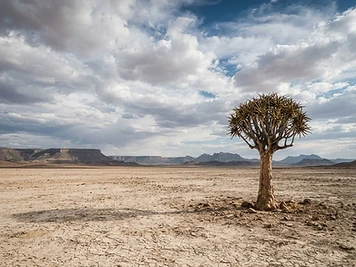
Tankwa Karoo National Park
Hyper-arid Karoo wilderness — stark landscapes, star fields and sparse desert fauna for those seeking silence.