Augrabies National Park
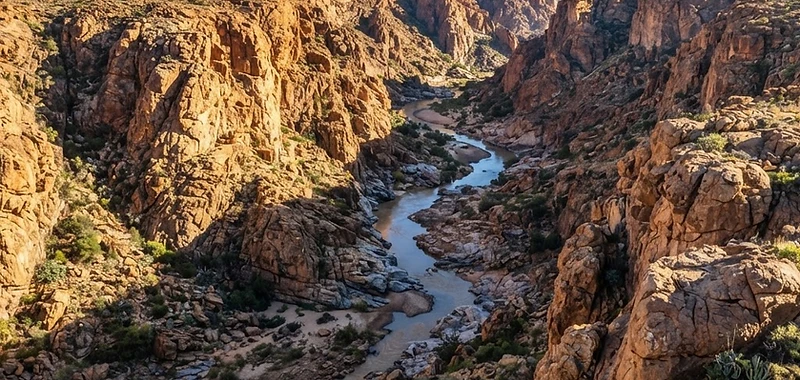
Arid park on the Orange River, centred on the Augrabies Falls where the river plunges into a granite gorge.
Trip Role
Ideal stay
Best for
Our take
A powerful, granite-carved desert oasis.
A powerful, granite-carved desert oasis.
- Trip Role
- Day Trip
- Ideal Stay
- 1 day
- Time Needed
- 1-2 days
- Best For
- Waterfall photography and arid landscapes.
- Go If
- You want to see one of the world's most impressive waterfalls in a stark, arid setting.
Why it's worth your time
Centered on the massive Augrabies Falls, where the Orange River plunges into a deep granite gorge, this arid park offers dramatic scenery and desert-adapted wildlife.
What we love
The sheer power of the Orange River as it carves through the granite gorge.
What to know
The heat in summer can be extreme; visit in the cooler months if possible.
The full guide
What it is like
Augrabies is a landscape defined by aggressive geometry. The Orange River forces its way through a deep, jagged granite gorge that dominates every aspect of the park. When you first arrive, the scale feels claustrophobic because of the sheer rock walls and the constant, thundering vibration of the falls that seems to permeate the ground itself. The air feels thin and dry, smelling of heated stone rather than damp earth or savanna vegetation.
The vegetation is sparse and hardy, consisting mostly of quiver trees and succulents that cling to the rock faces. Unlike the bushveld reserves to the east, there is no softening canopy to provide shade or visual relief. The light is harsh and unforgiving, bleaching the colours of the granite until everything appears to be in high contrast. The soundscape is dominated by the relentless roar of the river, which makes the surrounding desert-adapted silence feel heavier when you finally step away from the edge of the gorge.
Wildlife, realistically
Managing expectations here is essential. This is not a place for dense game viewing. You are not going to spend your morning ticking off the big five in a single loop. Most sightings concentrate near the riverine corridor, where shade and moisture offer the only real respite for animals. You will see plenty of klipspringer balancing on impossible rock ledges and rock hyraxes darting through the crevices. These animals are common and they do not mind your presence.
Finding larger predators or elusive desert antelopes is a matter of patience that the average visitor rarely possesses. The park is vast and the terrain allows animals to vanish into the granite folds within seconds. If you are desperate for high-frequency sightings, the park will disappoint you. The fauna here is adapted to an environment where energy conservation is the primary survival strategy. You see what is forced to move to reach the water, but the park is more a study in botanical resilience than a display of charismatic megafauna.
How a visit works
The park is structured for self-drive exploration. You rely on your own vehicle to navigate the network of gravel tracks that loop away from the main camp towards various viewpoints. The layout is logical but rigid. You enter through the main gate, which acts as the singular hub for information and basic supplies. Because the park is compact relative to the sprawling private reserves elsewhere, a single day is usually sufficient to cover the main circuit and see the major gorge overlooks.
Staying more than one night often leads to redundancy unless you are committed to professional photography. Your day is shaped by the geography of the river. You drive, you stop, you walk to a viewpoint, and you return to the car to escape the heat. There is little room for spontaneous deviations. The guided activities vary by operator and season, but they are peripheral to the primary experience of simply driving the circuit and observing the geological intensity of the gorge.
When to go
The summer months are genuinely uncomfortable. Temperatures routinely climb to levels that force most visitors into indoor containment during the middle of the day. You are effectively limited to dawn and dusk for any meaningful movement outside of your vehicle. While the river volume is often higher during the rainy season, the trade-off is stifling humidity and heat that leaches the pleasure out of the desert scenery.
Winter is the only sensible time to visit. The air is crisp, the light is less destructive, and the risk of heat exhaustion is significantly lowered. You pay for this comfort with higher visitor numbers and potential difficulties in booking accommodation within the park. If you visit in summer, you must accept that you are essentially a prisoner of your own air conditioning. Crowds are rarely an issue compared to the national parks in the northeast, but the thermal limitations of the environment dictate your itinerary more strictly than any ranger or signpost ever could.
Who it suits, who it does not
This park rewards the traveller who appreciates geological drama over high-density wildlife encounters. If you find beauty in silence, stark lines, and the raw power of moving water against stone, you will appreciate the time spent here. It appeals to the photographer and the solitary wanderer who does not mind being bored for long stretches in exchange for a few moments of profound, rugged spectacle. It is a place for quiet observation rather than adrenaline-fueled tracking.
It frustrates the traveller who equates a safari with constant sightings and green landscapes. If you expect the lush, teeming environment of the Kruger or the luxury of a private lodge experience, you are in the wrong province. You will feel that the park is empty and the effort of reaching it is not justified by the scenery. For those seeking a vibrant, animal-dense experience, the parks in the eastern provinces remain the superior choice. Do not come here expecting a traditional safari experience, as the landscape will force you to change your perspective or leave dissatisfied.
What's here
Also in Augrabies National Park

More national park in Northern Cape

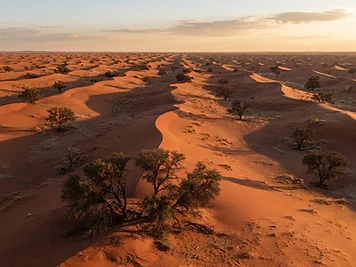
Kgalagadi Transfrontier Park
Vast red-dune Kalahari shared with Botswana — desert black-maned lions, gemsbok, and cheetah across the dry riverbeds.

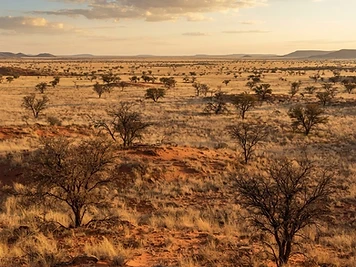
Mokala National Park
Kimberley's malaria-free park — roan, sable and tsessebe alongside the Big Five in acacia savanna.

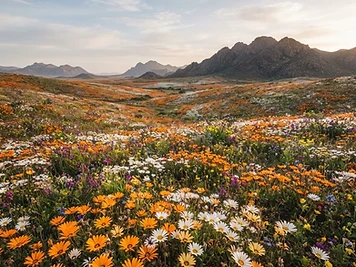
Namaqua National Park
The wildflower reserve that carpets the semi-desert in spring — one of the world's great blooms.

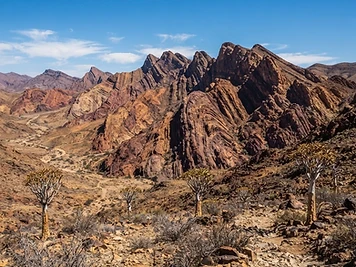
Richtersveld National Park
Mountain desert World Heritage Site on the Orange River — endemic succulents, desert scorpion and 4x4-only wilderness.

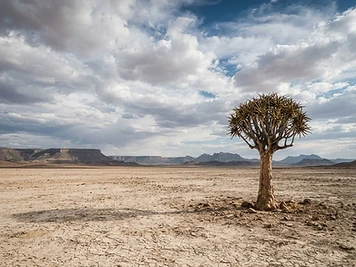
Tankwa Karoo National Park
Hyper-arid Karoo wilderness — stark landscapes, star fields and sparse desert fauna for those seeking silence.