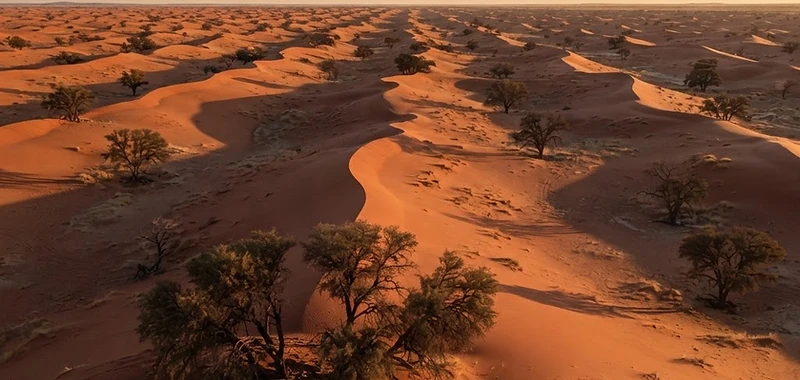
Kgalagadi Transfrontier Park
Vast red-dune Kalahari shared with Botswana — desert black-maned lions, gemsbok, and cheetah across the dry riverbeds.
Trip Role
Ideal stay
Best for
Our take
The Kalahari at its most cinematic — and a long way from anywhere.
The Kalahari at its most cinematic — and a long way from anywhere.
- Trip Role
- Trip Anchor
- Ideal Stay
- 3-4 nights
- Best For
- Return visitors, self-drive adventurers, desert and predator enthusiasts.
- Skip If
- First-timers who want easy sightings and a swimming pool.
- Go If
- You've done Kruger and want the other, emptier South Africa.
- Worth Extra Drive
- 240 min
What to optimise for
What Kgalagadi Transfrontier Park rewards
The same reserve can be a different trip depending on what you came for. Choose the version you want, then plan around it.
- Predator enthusiasts
- Focus on the riverbeds where black-maned lions and cheetah hunt daily. You must commit to dawn and dusk drives to see activity. The trade-off is long hours of sitting at a waterhole waiting for movement in the heat of the midday sun when lions sleep.
- Self-drive adventurers
- Plan your route between main camps to maximise time on gravel roads. You need to be entirely self-sufficient with fuel, water, and recovery gear. You compromise on comfort, as vehicle breakdowns in this remote desert are serious and require significant mechanical knowledge to manage until help arrives.
- Photography focus
- The red dunes and high-contrast light demand patience and tripod stability. Spend your days in the river valleys during the golden hours to capture the landscape. You sacrifice the variety of vegetation found in eastern parks, as the habitat here is strictly dry scrub and desert grass.
- Solitude seekers
- Avoid the main camps and look for wilderness camps deep in the dunes. You get silence and emptiness that is impossible to find in busier parks. The cost is total isolation, meaning no shops, no amenities, and long drives to reach the nearest point of supplies.
When to go
Timing a visit to Kgalagadi Transfrontier Park
Rain, grass and water decide what you see. These are the trade-offs, season by season.
May to September, winter
BestThis is the dry season. Sparse vegetation and water scarcity force animals to the riverbeds, making them easy to spot. Nights are freezing and days are pleasant. Dust is a constant companion on the roads. Expect peak demand for accommodation and higher prices during these months.
October and April, shoulders
GoodThese months offer a balance between temperature and game viewing. You avoid the extreme cold of winter and the brutal heat of mid-summer. Wildlife is still concentrated near permanent water sources. You might experience the start or end of the rainy season, bringing cooler breezes and dramatic skies.
November to March, summer
AvoidHeat reaches extreme levels, often exceeding forty degrees Celsius. Animals scatter into the vast interior as temporary pans fill with water, making sightings difficult. Thunderstorms are frequent, turning roads into mud traps. While you see calves and birds, the physical strain of the heat makes this period difficult.
How long to stay
Nights, and what each one buys
Nights are the unit of cost here. This is the honest return on each one.
- Day visit
- This is almost impossible due to the sheer size of the park. You will spend all your time driving to the gate and back, leaving almost zero time for actual game viewing. It is not recommended unless you are already camping at the park boundary.
- Two to three nights
- This allows you to explore one specific river valley properly. You can settle into the rhythm of the desert and increase your chances of a predator sighting. It remains rushed, as moving between distant camps consumes significant time that could be spent at waterholes.
- A week
- A week provides the time to traverse the park from north to south and experience different landscapes. You can spend days between main camps and wilderness areas without feeling pressured. This length is ideal for those who want to disconnect and properly absorb the desert scale.
Getting there
Airport, road, gate
Distances here are hours, not kilometres. Fuel up before the last town.
- Nearest airport
- Upington Airport is the primary gateway, located about two and a half hours from the Twee Rivieren gate. You will need to hire a vehicle in town before making the drive. Very few services exist between the airport and the park entrance.
- Drive
- From Johannesburg, it is a long drive of roughly ten hours, mostly on tarred roads through the Northern Cape. From Cape Town, it is equally distant. Most travellers break the journey in Upington to ensure they reach the park gates before closing time.
- Gates and hours
- Gate times are strictly enforced to protect wildlife and keep visitors safe. You must plan your arrival to ensure you are inside the park before sunset. Late arrivals are generally not permitted, and you will be stuck outside the gates until the following morning.
- Roads and vehicle
- The park is traversed by gravel roads that vary in quality. A sedan is technically possible but risks underbody damage and tyre punctures. A high-clearance vehicle is essential for comfort and safety. If it rains, many roads become inaccessible without a proper 4x4 and low-range capability.
Where to base yourself
Three kinds of base
The base decides your gate times, your privacy and your bill more than the reserve does.
Twee Rivieren
This is the main administrative centre and the busiest camp. It has fuel, a shop, and a restaurant. It acts as a necessary hub, but it lacks the quiet isolation found in the smaller camps further into the desert.
Nossob
Located deep in the park, this camp is central to the predator routes. It offers a more authentic desert experience than Twee Rivieren. You must be prepared for basic facilities and the reality of being far from any emergency medical or mechanical assistance.
Wilderness camps
These are small, unfenced camps that require advance booking. They provide the most immersive experience of the Kalahari. You are entirely on your own here. You must bring all your own supplies and manage your own waste and water requirements strictly.
Day trips and detours
What else the day holds
Most stays run on a fixed rhythm of dawn and dusk drives. The middle of the day is yours.
Mata-Mata to Twee Rivieren
Approximately 120 kilometres
This route follows the Nossob and Auob riverbeds. It is the core of the park and offers the best chance to see lions and cheetah. It is not really a day trip but a full day of driving that earns its keep.
Kameelsleep waterhole
Varies by base
This waterhole is a magnet for game. It is worth spending several hours here in the early morning. It earns its reputation for reliability. Skip it if you are looking for rare species, but stay if you want consistent action.
Botswana side entry
Requires park transit
Entering the Botswana side of the park is possible if you have bookings on that side. It is a long, arduous drive that is only worth the time if you are doing a full circuit of the park's deeper wilderness regions.
What it costs
The money, in bands
Rand rates and park fees change. Compare the bands, then check current figures with the park or the lodge directly.
- Park or reserve fees
- Conservation fees are charged per person per day. Rates vary depending on your citizenship and residency status. You should check the latest official price list before you travel as these are reviewed annually. You pay these upon entry to the park.
- Self-catering
- This is the most cost-effective way to see the park. You pay for your accommodation and bring your own food and fuel. Rates vary by camp and season. You must account for the high cost of fuel and vehicle maintenance due to the rough terrain.
- Mid-range guided
- Guided options are limited and often must be booked well in advance. These provide more comfort and the benefit of a tracker's knowledge. Rates vary significantly depending on the operator and the length of the guided activity chosen during your stay.
- Top end and fly-in
- There are private concessions on the park borders offering luxury lodges. These provide all-inclusive experiences with private game drives. Rates vary widely based on the lodge, season, and flight packages. It is an expensive way to remove the logistical burden of the trip.
Why it's worth your time
Kgalagadi Transfrontier Park straddles the South Africa–Botswana border in the far north of the Northern Cape, and it's the country's great wilderness for people who've already done the lowveld. Red dunes, camel thorn trees, gemsbok and springbok in their thousands, and the black-maned Kalahari lion that hunts them. Cheetah do well here too. It's malaria-free, but it's remote — a long drive on gravel from Upington, with camps far apart and roads that demand a sturdy vehicle and self-sufficiency. The reward is scenery and silence on a scale the eastern parks can't offer, and predator sightings without the convoy. Go in the winter dry months; summer is brutally hot and sightings scatter.
What we love
Kalahari lions on red dunes at dawn, with no other vehicle in sight.
What to know
Malaria-free. Remote — gravel roads, long distances, carry water and fuel planning. 4x4 or high-clearance recommended.
The full guide
What it is like
The Kgalagadi Transfrontier Park is an immense expanse of rust-coloured sand and sparse, sun-bleached vegetation. The landscape is defined by the stark geometry of fossilised riverbeds and the rising, undulating slopes of ancient red dunes. Light here has a physical weight, searing the horizon at midday and softening into a deep, bruised orange as the sun drops behind the camel thorn trees. Silence is the default condition. When you pull up at a waterhole in the first hour, the absence of ambient mechanical noise is total. You hear only the wind against the dry grass or the distant, sharp alarm call of a ground squirrel.
Unlike the dense thickets of the lowveld, the Kgalagadi offers immense visibility. You can track movement across kilometres of open pans without obstruction. The scale is exhausting to grasp. The environment is punishing, stripped of the lushness that defines southern Africa’s other prominent reserves. You are constantly aware of how little water sustains this ecosystem. It feels less like a wildlife park and more like an endurance test for everything that lives within its borders. It is a land of hard edges and extreme clarity.
Wildlife, realistically
Gemsbok and springbok are the baseline. They move in vast, drifting herds across the pans, and you will see them constantly. The predator sightings are the main objective for most, and the Kgalagadi earns its reputation for big cats. The black-maned Kalahari lions are the icons here. They move with purpose along the riverbeds and are often found resting in the shade of a camel thorn. Cheetah thrive in this open environment, moving fast across the flats to hunt, though they are harder to spot against the mottled earth. Leopards exist, but they are elusive and require patience in the few wooded sectors where they choose to hide.
Do not expect the variety of the eastern parks. You will not find the same density of elephants or the chaotic diversity of a woodland safari. Finding a kill is a matter of hours spent waiting by a waterhole or tracking footprints in the sand. Birds of prey are common, circling the hot air thermals, but shy species like honey badgers or brown hyenas require luck and a willingness to drive long, slow stretches. It is an honest place. If you are not patient, the park will look empty.
How a visit works
A visit to the Kgalagadi is entirely dependent on your own competence and vehicle. This is not a destination for the passive traveller who expects a guide to manage their day. You need a high-clearance vehicle, preferably a 4x4, to navigate the deep sand and corrugated gravel roads that connect the main camps. Gate logic is strict, and you must respect the closing times as the distances between locations are significant. A single day can easily involve three hundred kilometres of slow, jarring driving. You spend your hours monitoring the horizon, pulling over for animals, and managing your own fuel and water intake.
Staying for just one night is a mistake. You need at least three or four nights to settle into the rhythm of the park. It takes time to learn the topography and to understand how the predators navigate the riverbeds. Camps vary in terms of facilities, and some are more remote than others, requiring you to bring your own supplies from outside the park. Do not arrive hoping to pick up essentials at the last minute. Self-sufficiency is the gatekeeper here.
When to go
The winter months from May to September represent the only sensible window for most travellers. During this time, the days are crisp and the nights are bitingly cold, but the wildlife is forced to congregate around the permanent waterholes. Game visibility is at its peak when the vegetation is at its most withered. You gain the advantage of being able to sit by a waterhole all day in relative comfort, knowing that the animals have nowhere else to hide. The risk of intense heat-induced lethargy is low, and you can drive for long stretches without the engine overheating.
Summer is a different experience and one that frequently leads to disappointment. Temperatures climb to levels that are dangerous for both the animals and the visitor. The wildlife disperses as seasonal pans fill with rain, making sightings rare and unpredictable. The dust turns to mud in some areas, while in others, the heat haze obscures everything. Prices might fluctuate by operator, but the cost of a summer visit is often offset by the difficulty of the conditions. You go in winter to see; you go in summer to suffer.
Who it suits, who it does not
This park rewards the patient, seasoned traveller who values solitude over sheer variety. If you have done the traditional circuit of the eastern reserves and find them too crowded or manicured, the Kgalagadi offers a necessary correction. It suits people who enjoy the process of driving, who appreciate the aesthetic of the desert, and who are content sitting silently for hours without a guaranteed sighting. If you want the luxury of a short drive and a high-frequency animal count, you will find this place frustrating and needlessly difficult.
It is a destination that demands resilience. If you are looking for soft beds, proximity to town, and constant interaction with staff, look elsewhere. People who want the big five ticked off in a single afternoon will leave feeling that the effort was not worth the reward. For those people, a private game reserve near a main airport remains the superior alternative. The Kgalagadi is for those who do not mind the dust and the long, empty stretches between the gemsbok and the pride of lions.
Before you book
Questions Kgalagadi Transfrontier Park always raises
- Is malaria a risk here?
- No, the Kgalagadi is malaria-free. The dry, arid environment does not support the mosquito populations found in the northern lowveld. You do not need to take any prophylaxis medication, which makes this an excellent choice for families or those who want to avoid the side effects.
- Is a 4x4 vehicle strictly required?
- A 4x4 is highly recommended but not legally mandatory for all roads. The gravel surfaces are corrugated and can be treacherous. If you choose to drive a sedan, you accept the high risk of tyre damage and getting stuck. High clearance is essential for your own peace of mind.
- Can I get here easily from Johannesburg?
- It is not an easy trip. It is a long journey of over ten hours, mostly on tar roads until you hit the Northern Cape gravel. It is a destination for those who enjoy the drive itself, not a quick getaway. Plan for an overnight stop in Upington.
- Is this park better than Kruger?
- It is different, not better. Kruger offers a dense, green bush experience with high wildlife numbers. The Kgalagadi offers a vast, silent, red-dune desert with a focus on predators and scale. If you want variety and easy infrastructure, go to Kruger. If you want space, go here.
- Are children allowed in the park?
- Yes, children are welcome. However, the park is remote with limited medical facilities, so you must be fully prepared to handle any situation yourself. It is not a place for children who need constant entertainment or soft amenities. The long, hot drives can be very difficult for younger children.
More national park in Northern Cape

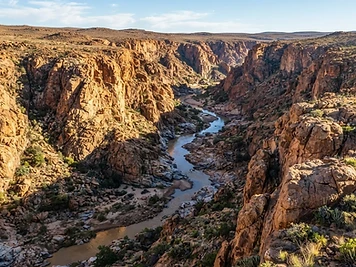
Augrabies National Park
Arid park on the Orange River, centred on the Augrabies Falls where the river plunges into a granite gorge.

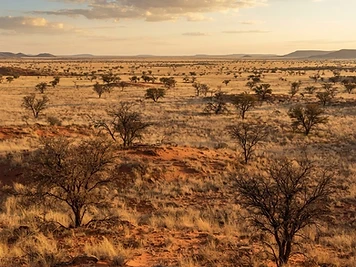
Mokala National Park
Kimberley's malaria-free park — roan, sable and tsessebe alongside the Big Five in acacia savanna.

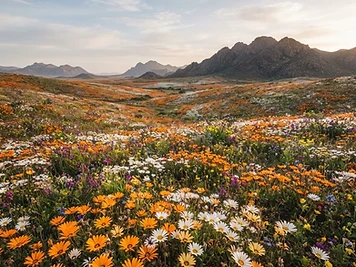
Namaqua National Park
The wildflower reserve that carpets the semi-desert in spring — one of the world's great blooms.

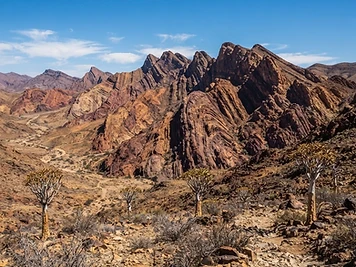
Richtersveld National Park
Mountain desert World Heritage Site on the Orange River — endemic succulents, desert scorpion and 4x4-only wilderness.

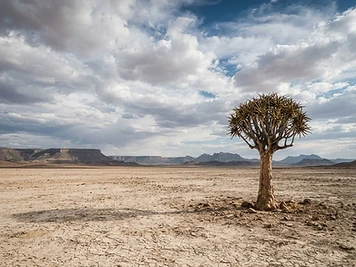
Tankwa Karoo National Park
Hyper-arid Karoo wilderness — stark landscapes, star fields and sparse desert fauna for those seeking silence.