
Swartberg Pass
Thomas Bain's 19th-century masterpiece of dry-stone engineering over the Swartberg range.
Trip Role
Ideal stay
Best for
Our take
This is a masterpiece of nineteenth-century engineering that demands respect. It is a raw, gravel-bound climb through folded stone that rewards patience with some of the most dramatic mountain scenery in the country.
This is a masterpiece of nineteenth-century engineering that demands respect. It is a raw, gravel-bound climb through folded stone that rewards patience with some of the most dramatic mountain scenery in the country.
- Trip Role
- Worth a Detour
- Ideal Stay
- 90 minutes to two hours, excluding stops.
- Best For
- historic dry-stone engineering, dramatic mountain views, Karoo landscapes, slow travel
- Skip If
- nervous drivers, those in a hurry, vehicles with very low clearance
- Go If
- You are a confident driver who enjoys slow, deliberate travel on unpaved surfaces and wants to experience a historic route that connects the Klein Karoo to the Great Karoo.
Why it's worth your time
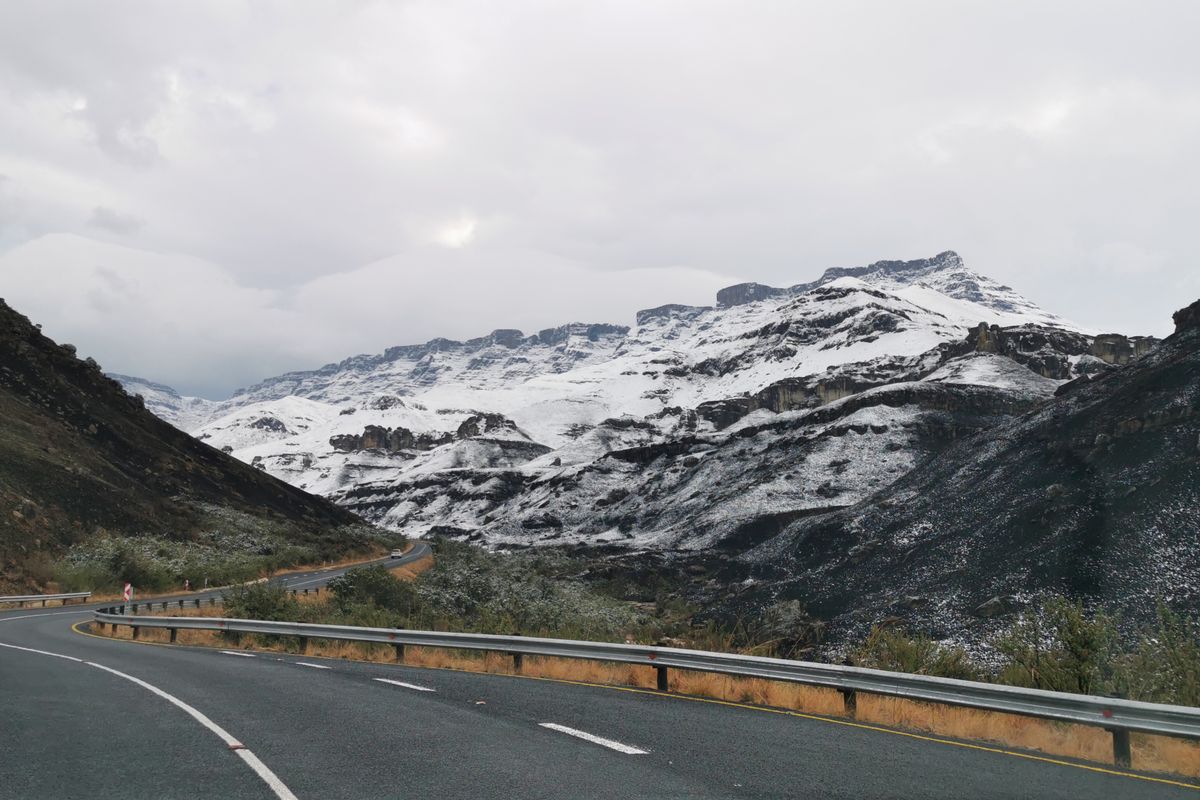
One of the great mountain drives in the country — gravel, switchbacks, and drop-dead views. Take it between Oudtshoorn and Prince Albert slowly; the summit is often cold and clouded.
What we love
The dry-stone retaining walls are the highlight. Built by hand without mortar in the 1880s, they hold the road against the cliffs with a precision that modern concrete rarely matches. Seeing these structures while navigating the tight switchbacks makes the drive feel like a journey through time.
What to know
The pass is a gravel road, not a 4x4 track, but its condition varies wildly based on recent weather. It closes frequently after rain or snow. Always check with local accommodation or tourism offices in Oudtshoorn or Prince Albert on the morning of your drive. Never rely on online status updates alone.
The full guide
The route and direction
The pass runs for roughly 27 kilometres between Oudtshoorn and Prince Albert. Driving it in either direction is perfectly acceptable, though many prefer starting in Prince Albert to tackle the climb early. If you head toward Oudtshoorn, the passenger side faces the valley, which is better for photography. The route is not a shortcut; it is a destination in itself. Allow at least two hours for the full transit to account for photo stops and the necessary slow pace. If you are travelling from the coast, the transition from the lush, irrigated fields of the Klein Karoo to the sparse, rugged terrain of the Great Karoo is stark. The summit serves as the natural divide between these two worlds, offering a vantage point that captures the scale of the Swartberg range.
The road and vehicle requirements
The surface is gravel and sand, maintained periodically but prone to corrugations and loose stones, especially on the outside of corners. The road is narrow, with steep gradients and sharp switchbacks that require constant attention. While you do not need a 4x4, a vehicle with decent ground clearance is an advantage when crossing small streams or navigating eroded sections. There are no guardrails, only the original dry-stone walls, which provide a psychological boundary rather than a physical one. Passing oncoming traffic requires patience; use the designated passing places and pull over safely. If you are driving a low-clearance vehicle, take the sections with loose rock or washouts at a crawl to avoid damage. The road is not inherently dangerous for a careful driver, but it is unforgiving of speed or distraction.
Weather and timing
The pass is at the mercy of the mountain climate. Rain, mist, and snow can turn the gravel into a slippery hazard and reduce visibility to near zero. The road authority closes the gates for safety during these events, and they stay shut until crews have cleared the debris. Do not attempt the drive if the weather is turning or if the pass is marked as closed. Winter months bring the highest risk of snow and ice, while summer afternoons can be intensely hot. The best strategy is to build flexibility into your itinerary. Treat the pass as a bonus rather than a guaranteed route. If it is closed, the tarred Meiringspoort is the standard alternative, though it too can be affected by the same storm systems.
Before you book
Questions Swartberg Pass always raises
- Do I need a 4x4 to drive the Swartberg Pass?
- No. It is a graded gravel road that is perfectly manageable in a standard two-wheel-drive vehicle. You do not need special equipment, but you should drive slowly and be mindful of your vehicle's ground clearance on uneven sections.
- How do I know if the pass is open?
- There is no reliable, automated online system. The most accurate way to check is to ask your accommodation host or the local tourism office in Oudtshoorn or Prince Albert on the morning of your planned departure. They track closures as a matter of routine.
- Is the pass dangerous to drive?
- It is challenging but not dangerous for a careful driver in good weather. The road is narrow with steep drop-offs, so it requires your full attention. If you are nervous about heights or narrow mountain roads, you may find it stressful.
- What happens if I arrive and the gate is closed?
- You must turn around. The gates are closed by the road authority for your safety, usually due to rockfalls, heavy rain, or snow. Do not attempt to bypass a closed gate, as the road conditions beyond it may be hazardous or impassable.
More mountain pass in Western Cape

Bainskloof Pass
Another Thomas Bain pass, linking Wellington to the Ceres Valley over the Limietberg.
Bloukrans Pass
A steep Tsitsikamma pass down to the Bloukrans River — the road beside the world's highest bungee bridge.

Grootrivier Pass
The pass that drops into the Tsitsikamma Groot River gorge — the dramatic eastern end of the Garden Route.

Meiringspoort
A spectacular road that threads a gorge through the Swartberg, crossing the river 25 times.

Outeniqua Pass
The modern N9/N12 pass over the Outeniqua range to George — the main route to the Klein Karoo and Oudtshoorn.

Robinson Pass
The R62 pass over the Outeniqua between Oudtshoorn and the coast at Mossel Bay — the Klein Karoo's dramatic drop to the sea.