Gondwana Game Reserve
11,000-hectare malaria-free Big Five reserve on the Garden Route — fynmos ecosystem with free-roaming wildlife.
Trip Role
Ideal stay
Best for
Our take
A scenic, malaria-free highlight of the southern coast.
A scenic, malaria-free highlight of the southern coast.
- Trip Role
- Base
- Ideal Stay
- 2-3 days
- Time Needed
- 2 days
- Best For
- Garden Route travelers.
- Go If
- You are touring the Garden Route and want a Big Five experience without flying north.
Why it's worth your time
Located on the Garden Route, Gondwana is a malaria-free reserve set within a unique fynbos ecosystem. It offers a distinct visual experience compared to the traditional bushveld of the north.
What we love
The dramatic mountain backdrops and fynbos vegetation.
What to know
The terrain is hilly, which can make spotting smaller animals more challenging.
The full guide
What it is like
Gondwana feels different the moment you pass through the gate. It is not the scrubby, flat landscape of the northern reserves. Instead, you drive through rolling hills covered in dense, low-lying fynbos vegetation. The backdrop is defined by the dramatic peaks of the Outeniqua and Langeberg mountains. The air here feels coastal and sharp, lacking the humid, heavy heat that hangs over the Lowveld during the summer months. It is quiet in a way that feels vast, though the scale of the reserve is smaller than the massive private concessions in the Kruger. Light behaves differently here, catching the proteas and the silvery green of the mountain vegetation during golden hour. You realise quickly that you are not in the traditional African savannah. It is a curated landscape that feels rugged and exposed, rather than enclosed by thick woodland. The lack of tall, screening trees makes the scenery feel open and expansive, forcing your eyes to adjust to scanning distant slopes rather than peering into dark thickets.
Wildlife, realistically
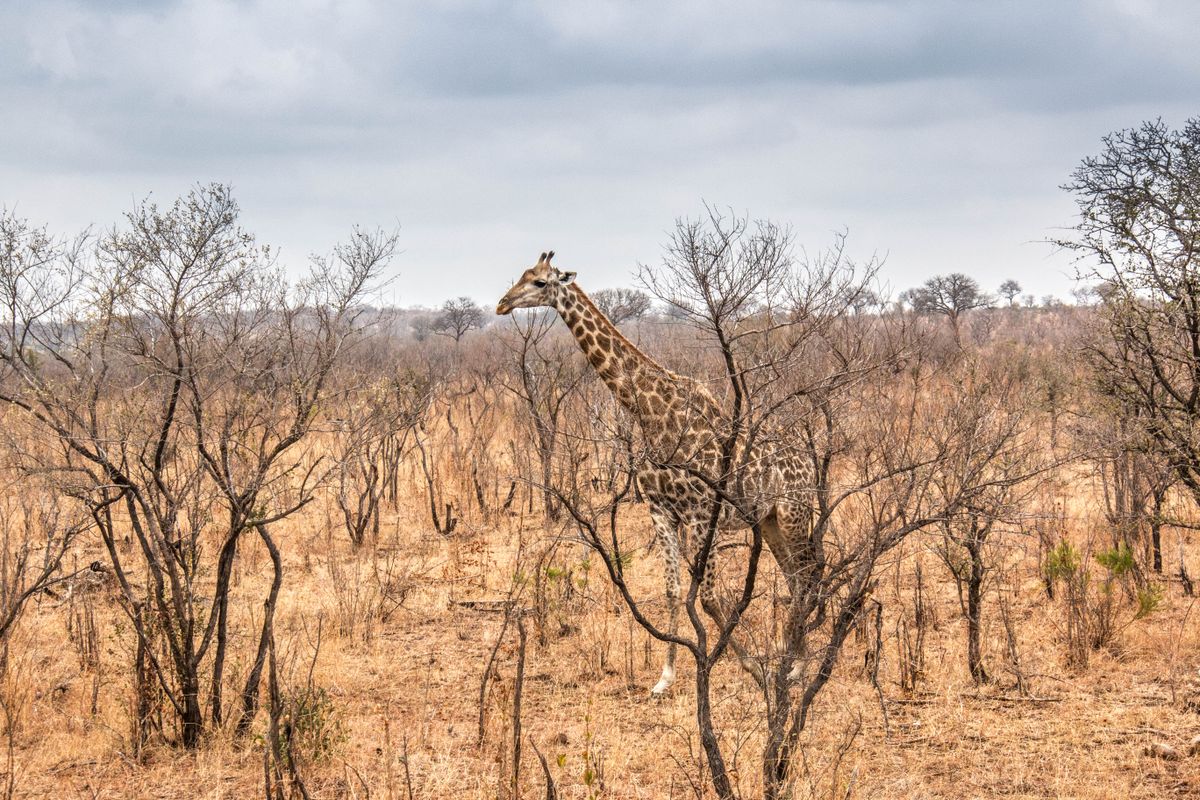
Expectations need a calibration here. This is a re-established reserve, not a place with centuries of intact, undisturbed predator migration. You will see the Big Five, but you are not wandering through a primordial wilderness. Sightings are concentrated around the water sources and the flatter valley floors where animals can graze without the hindrance of the steeper, rocky terrain. Giraffe, zebra, and herds of antelope are frequent visitors, appearing clearly against the fynbos backdrop. Leopards are present but notoriously difficult to spot given the mountainous topography and the nature of the cover. Do not come here expecting the high-density leopard sightings you get in the Sabi Sands. Seasonal movement is less about migration and more about the animals seeking shelter from the wind or exposure to the sun on the hillsides. If you are desperate for a lion kill or a complex hunt, you might leave disappointed. Focus instead on the sheer visibility provided by the terrain, which allows you to track movement across ridges in a way that is impossible in denser bush.
How a visit works
Your movement is restricted to the guided game drives provided by the lodge operators. Private vehicles are generally not permitted to roam freely as they might be on a public reserve. This is the classic private game reserve model where you are shepherded by a ranger from dawn until well after dark. The rhythm is regimented. You wake before sunrise, spend a few hours in the vehicle, return for a heavy breakfast, and then fill the middle of the day with lodge activities or waiting for the afternoon shift. Two to three days is the sweet spot. Anything less feels like a rushed check-box exercise. Anything more than four days invites stagnation, as you will have likely seen the core territory and the primary wildlife highlights by then. The lodges are the base for everything, and you rarely leave the property once you have checked in. It is a controlled, predictable experience that is meant to maximise comfort rather than facilitate independent adventure.
When to go
The malaria-free status makes this a year-round contender, but the seasons shift the experience significantly. Summer brings long, hot days and the risk of fires in the dry fynbos, which can be brutal if you are out in an open vehicle during the middle of the day. The vegetation can be lush, but the animals often retreat to shade, making them harder to find. Winter is the time for clarity. The air is cold and crisp, which makes the morning drives bracing, but the lack of foliage and the preference for sunshine makes animals much easier to track. You will save money by visiting during the shoulder seasons of spring or autumn. Crowds are an issue during the peak Garden Route holidays when local families flock to the coast, driving up the prices and making the lodge environments feel far less secluded. If you value silence and solitude, avoid December and January entirely, regardless of the favourable weather patterns.
Who it suits, who it does not
This place rewards the Garden Route traveller who wants to tick off a safari requirement without adding an expensive flight to the north of the country. It suits families who are terrified of malaria and want the safety of a fenced, managed environment. If you want a comfortable, scenic, and manageable experience that complements a trip to the coast, you will be happy here. It is a clean, reliable, and aesthetically pleasing destination.
It will frustrate the seasoned safari traveller who equates wilderness with the raw, chaotic energy of the Kruger or the Timbavati. If you require vast, uninterrupted wild spaces and a high density of apex predators to feel satisfied, this will feel like a petting zoo with a mountain view. If this describes you, skip the Western Cape for your safari and go straight to the Lowveld or Botswana. Gondwana is a compromise, and if you are not prepared for that, it will never feel like the real thing.
More private reserve in Western Cape
Aquila Private Game Reserve
Closest Big Five reserve to Cape Town — a malaria-free day-trip safari option for short-stay visitors.
De Hoop Nature Reserve
Coastal reserve on the Overberg with fynbos, white dunes, and the Whale Trail multi-day hike.
Sanbona Wildlife Reserve
Big Five in the Little Karoo — fynbos-meets-Karoo landscape, white lion project, and rock art, malaria-free.