Camdeboo National Park
Surrounds Graaff-Reinet and the Valley of Desolation — kudu, springbok and Cape buffalo among dramatic Karoo columns.
Trip Role
Ideal stay
Best for
Our take
The perfect marriage of Karoo history and stark, monumental geology.
The perfect marriage of Karoo history and stark, monumental geology.
- Trip Role
- Worth a Detour
- Ideal Stay
- 2 days
- Time Needed
- 1-2 days
- Best For
- Geological scenery and Karoo wildlife
- Go If
- You are driving through the Karoo and want to witness one of South Africa's most dramatic geological viewpoints.
Why it's worth your time
This park encircles the historic town of Graaff-Reinet, featuring the iconic dolerite columns of the Valley of Desolation. It protects a diverse Karoo ecosystem home to buffalo, kudu, and springbok.
What we love
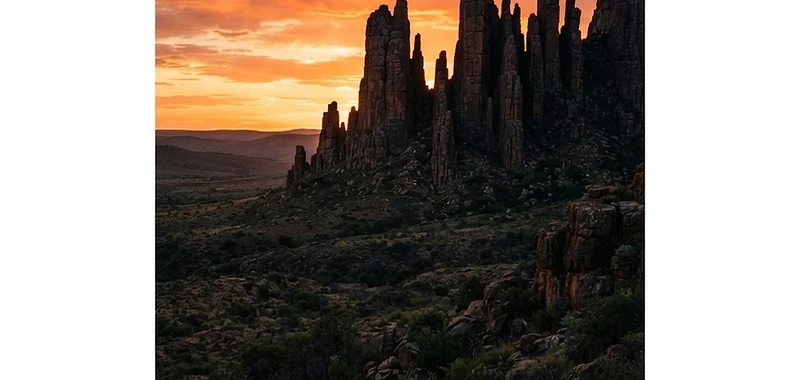
Sunset at the Valley of Desolation, where the plains drop away into a labyrinth of rock pillars.
What to know
The park is split into two sections; the game viewing area and the mountain viewpoint are separate.
The full guide
What it is like
Camdeboo National Park feels like an extension of the earth itself rather than a curated animal enclosure. The landscape is dominated by the vast, open plains of the Karoo, punctuated by the jagged, ancient dolerite columns of the Valley of Desolation. Your first hour here is defined by a sense of scale that makes most other reserves feel cramped or artificial. The light in the Karoo is sharp and unforgiving, turning the craggy rock faces a bruised purple as the sun begins to sink. You will hear the wind whistling through the scrubland and the persistent, dry rustle of heat-hardened bushes.
This is not the lush, green canopy of the Lowveld. The vegetation is sparse and low, consisting largely of Karoo shrubs and stunted trees that demand attention through their resilience. Unlike the dense neighbouring private reserves that rely on thickets to shroud their animals, Camdeboo leaves nothing to the imagination. The horizon is always present and intimidating. It is a place of geological theatre where the silence between the gusts of wind is as heavy as the stone pillars surrounding the valley floor.
Wildlife, realistically
Do not arrive expecting a checklist of the Big Five. Camdeboo is about plains game and the sheer endurance of species that thrive in arid conditions. You will see plenty of springbok and kudu, which are as common here as blades of grass in a garden. Buffalo are the primary heavy hitters, though finding them requires patience and a good eye because they blend into the dark shadows of the broken terrain. It is a game of spotting shapes and movement against the stillness of the veld.
Sightings are generally concentrated around the few reliable water points during the dry months. Predators are present but elusive, and you should not count on seeing a cheetah or a leopard unless you are extraordinarily fortunate. The movement of the herds follows the erratic rainfall patterns, so their distribution changes from week to week. Some visitors spend half a day spotting nothing more than a dust devil and a few distant ostriches, while others stumble across a herd of buffalo grazing near the tracks. It is a wilder, more honest experience than a managed safari lodge, and for that reason, sightings feel earned rather than served.
How a visit works
The park is split into two distinct, non-contiguous sectors. You have the game viewing area, which takes up a significant portion of your daylight hours, and the mountain viewpoint at the Valley of Desolation, which is a separate destination entirely. Most people attempt to squeeze both into a single afternoon, which is a mistake that leads to rushing and missed opportunities. The gate logic is straightforward, but navigating the roads requires a slow, deliberate pace. This is not a place for high-speed transit.
Two days is the absolute minimum requirement to get a proper sense of the park. Anything less and you are merely ticking a box on a road trip. One day is too short to let the rhythm of the veld sink in, while four days might start to feel repetitive for those who prefer constant action. A self-drive approach is the only way to do it right. You want the freedom to stop at a ridge and wait for the light to change, rather than being beholden to the schedule of a guided vehicle. Build your day around the heat cycles and ensure you are at the viewpoint well before the sun touches the horizon.
When to go
Choosing a season involves choosing your own form of discomfort. The summer months bring searing heat that turns the plains into a furnace by noon, though it also brings the potential for dramatic thunderstorms that briefly turn the desert green. You will have to hide in your vehicle during the middle of the day. Game visibility is often better in the dry winter months when the animals are forced to congregate around predictable water holes, but the nights are cold enough to bite through layers of clothing.
Fire is a genuine risk during the late winter and spring months when the scrub is tinder-dry. Crowds are rarely a problem here compared to the more famous parks further north, but you will still encounter more travellers during the standard South African school holidays. Cost fluctuations vary by operator if you stay in the nearby town of Graaff-Reinet or the park accommodation, but the park itself remains an affordable entry point for the region. Visit in the shoulder season if you want to balance the temperature with the likelihood of finding game near the roads.
Who it suits, who it does not
This place rewards the observant traveller who finds beauty in barren spaces. If you appreciate geology, wide-open horizons, and the quiet solitude of the Karoo, you will leave feeling satisfied. It is perfect for those who are weary of the frantic, crowded nature of more commercialised safari destinations and want to engage with a landscape that feels unchanged for centuries. It suits the self-sufficient driver who is happy with a thermos of coffee and a pair of binoculars.
It will frustrate anyone who equates a safari with high-density predator sightings or luxury amenities. If you are looking for a tropical, lush experience where the grass is high and the lions are lounging beside your bumper, you are in the wrong province. Those seeking a fast-paced environment with frequent stops for sightings will feel the weight of the empty plains as a failure. When the emptiness of Camdeboo begins to feel like a void rather than a luxury, you should head to the Eastern Cape coastal reserves, where the bush is thick and the wildlife density is much higher.
More national park in Eastern Cape

Addo Elephant National Park
Malaria-free elephant country — one of the best places on earth to see elephants in volume.
Addo Elephant National Park
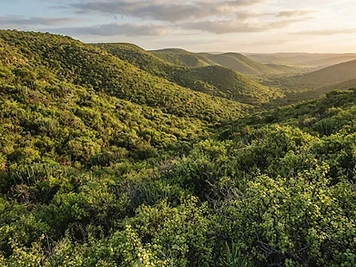
Home to more than 600 elephants, plus lion, buffalo and the world's largest flightless dung beetle — a malaria-free Big Five park near Gqeberha.

Mountain Zebra National Park
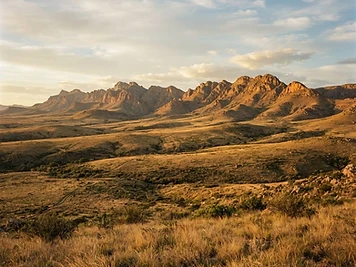
Cape mountains sanctuary for the endemic Cape mountain zebra, plus cheetah, buffalo and black rhino — malaria-free near Cradock.