Addo Elephant National Park
Home to more than 600 elephants, plus lion, buffalo and the world's largest flightless dung beetle — a malaria-free Big Five park near Gqeberha.
Trip Role
Ideal stay
Best for
Our take
The best malaria-free safari in the country for a short, easy trip.
The best malaria-free safari in the country for a short, easy trip.
- Trip Role
- Trip Anchor
- Ideal Stay
- 1-2 nights
- Best For
- Families, first-timers, anyone routing along the Eastern Cape coast.
- Skip If
- Travelers chasing dense predator action or vast wilderness.
- Go If
- You want a real safari without a malaria zone or a lowveld flight.
What to optimise for
What Addo Elephant National Park rewards
The same reserve can be a different trip depending on what you came for. Choose the version you want, then plan around it.
- Self-drive safari
- Stay within the main camp to maximise time on the grid of gravel roads. The park is compact and navigation is simple, making it perfect for independent viewing. The trade-off is the lack of off-road capability for tracking elusive predators compared to the private reserves bordering the park.
- Family safari
- The malaria-free status and proximity to Gqeberha make this ideal for children. Focus on the main camp's waterhole where elephants often congregate within metres of the viewing fence. You will sacrifice the vastness of other parks, but the ease of travel reduces the strain on younger travellers significantly.
- Big Seven chasers
- Include the marine section of the park to spot southern right whales and sharks. This requires planning around the ocean conditions and specific tour operators. You lose time spent on traditional land-based game drives, but ticking off these seven distinct species remains a unique achievement in South African conservation.
- First time safari
- Stick to the main circuits and spend time at the hides to guarantee sightings. This provides an approachable introduction to African megafauna without the complexities of flight logistics or health precautions. The compromise is a more structured, park-like environment that lacks the raw, wild isolation of larger reserves.
When to go
Timing a visit to Addo Elephant National Park
Rain, grass and water decide what you see. These are the trade-offs, season by season.
May to September, dry winter
BestThe vegetation thins out significantly, making game much easier to spot against the sparse backdrop. Animals congregate around permanent water sources, increasing the frequency of sightings. Nights are cold and require warm clothing, but the clear skies and lack of humidity make for comfortable days spent driving the park.
November to March, green season
MixedExpect thick, lush bush that hides elephants and predators alike. Afternoon thunderstorms are frequent and roads can become muddy. The heat is persistent, and game is more dispersed due to widespread surface water. However, you will see calves and migrant birds, and the park feels significantly less crowded.
April and October, shoulder
GoodThese months offer a transition period where temperatures are mild and the bush density is manageable. You avoid the peak crowds of the mid-year school holidays while still enjoying reasonable weather. Rain is less predictable, but the overall experience is balanced for those who prefer moderate climate conditions.
How long to stay
Nights, and what each one buys
Nights are the unit of cost here. This is the honest return on each one.
- Day visit
- A single day allows you to drive the main circuits and see the elephants around the central waterholes. It is sufficient if you are merely passing through the Eastern Cape, but you will likely miss the quieter, more rewarding sightings that occur at dawn and dusk.
- Two to three nights
- This is the ideal duration. It provides enough time to explore the diverse vegetation zones, visit the marine section, and sit quietly in a hide. You have the flexibility to wait for animals to emerge from the bush, which is the only way to see the park properly.
- A week
- Seven days is excessive unless you plan to use Addo as a base for exploring the surrounding Eastern Cape coast. You will find yourself repeating the same driving routes frequently. Limit your stay to ensure you do not grow tired of the relatively small confines of the reserve.
Getting there
Airport, road, gate
Distances here are hours, not kilometres. Fuel up before the last town.
- Nearest airport
- Gqeberha, formerly Port Elizabeth, is the closest major hub. It is located roughly one hour from the main entrance. You will need to rent a vehicle at the airport to reach the park, as public transport options do not service the entrance gate directly.
- Drive
- The drive from Gqeberha is straightforward, taking about an hour on tarred roads. If coming from Cape Town, allow for an eight to ten-hour drive along the Garden Route. It is a long haul that requires careful pacing to avoid arriving at the gate after dark.
- Gates and hours
- Gate times are strict and dictate your daily rhythm. Always arrive well before closing to avoid penalties or being denied entry. Once inside, you must adhere to the speed limits and respect the park rules, which are enforced to protect the animals and your own safety.
- Roads and vehicle
- A standard sedan is perfectly adequate for the main tourist routes within the park. The roads are a mix of tar and gravel. While 4x4 vehicles offer a higher vantage point for photography, they are not a requirement for navigating the park's primary visitor areas.
Where to base yourself
Three kinds of base
The base decides your gate times, your privacy and your bill more than the reserve does.
Main Camp
This is the most convenient base for self-drivers. It provides direct access to the most productive waterholes and hides. You sacrifice seclusion for infrastructure and proximity, but it remains the most practical location for ensuring you see the core highlights of the park each day.
Private concession
These offer an exclusive, high-end experience with guided drives into restricted areas. You will pay significantly more for luxury and silence. Choose this if you want to avoid the self-drive crowds and prefer having a professional tracker lead you to the more elusive predators.
Gateway town accommodation
Staying outside the park reduces your daily costs but forces you to commute to the gate every morning. You will miss the early dawn and late evening hours when wildlife is most active. Use this option only if park accommodation is fully booked or if budget is critical.
Day trips and detours
What else the day holds
Most stays run on a fixed rhythm of dawn and dusk drives. The middle of the day is yours.
Marine section
Varies
Accessing the marine part of the park involves heading to the coastal edge. It is worth the detour if you want to spot whales or penguins. It is a completely different landscape from the bushveld, providing a nice contrast to the elephant-focused inland game drives.
Zuurberg Mountains
30 minutes from main gate
The mountain pass offers a change of scenery and impressive views. It provides a quiet escape from the busier game-viewing circuits. It is worth the trip for the scenery alone, though do not expect high-density game viewing along the steeper, forested slopes of the range.
Gqeberha coastal area
1 hour drive
Use this as a fallback if the weather turns or if you need supplies. It is a standard urban environment with beaches. Only go if you have extended your stay beyond three days, as it adds little value to an authentic, bush-focused safari trip.
What it costs
The money, in bands
Rand rates and park fees change. Compare the bands, then check current figures with the park or the lodge directly.
- Park or reserve fees
- These are levied daily and vary depending on your citizenship and age. Check the latest rates directly with the park authorities before departure. These fees are mandatory and support the ongoing conservation work and maintenance of the road network throughout the reserve.
- Self-catering
- Staying in a park chalet allows you to cook your own meals, keeping expenses predictable. You must bring all your own groceries, as supplies in the park are limited. Rates for accommodation vary by season, so book early for the best options during the dry winter months.
- Mid-range guided
- This involves staying in private lodges that include some meals and game drives. You get more comfort and expertise than self-catering but at a higher price. Rates vary significantly depending on the season and the specific lodge amenities, so confirm all inclusions before you book your trip.
- Top end and fly-in
- This is for travellers seeking exclusivity and luxury in private concessions. It is the most expensive way to experience Addo. Rates vary by operator and include high-end dining and professional guiding. It is a significant investment that should be vetted against your expectations for service and privacy.
Why it's worth your time
Addo is the Eastern Cape's answer to Kruger without the malaria and without the flight to the lowveld, an hour from Gqeberha (Port Elizabeth). It started as an elephant sanctuary and the elephants are still the headline — hundreds of them, easy to find, often close to the road. It's since grown into a Big Seven park, adding southern right whales and great white sharks to the Big Five across its expanded marine section. For a first safari, a family safari, or a two-day stop on a Garden Route drive, it is the most accessible serious game park in the country. The trade-off is scale and variety: it's a fraction of Kruger's size, the predator density is modest, and self-drive sightings can be quieter than the private reserves nearby. But for the price and the ease, few places beat it.
What we love
Elephants you can nearly count on, in a malaria-free park you can reach on a day's drive.
What to know
Malaria-free. Main camp is the best base; book the waterhole hide for an hour at dusk.
The full guide
What it is like
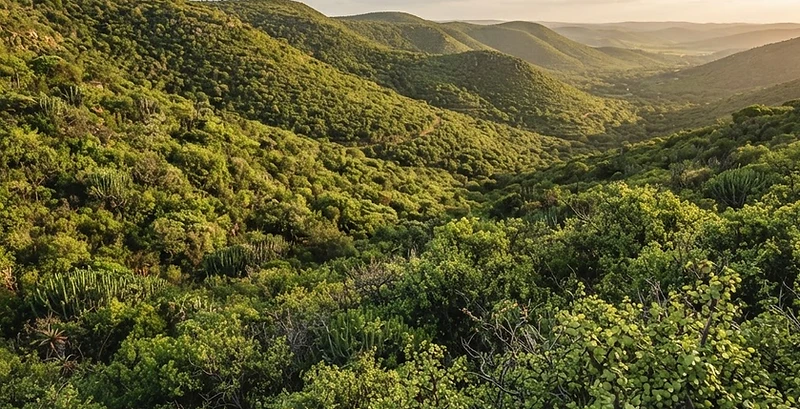
Addo is a landscape of dense, grey-green thicket that dominates the horizon. This is not the wide, open savannah of popular imagination. The vegetation is scrubby and tangled, which forces animals to emerge at waterholes or cross the narrow tracks. The light here feels heavy and unfiltered, reflecting off the dust of the roads during the dry months. The soundscape is defined by the crack of branches as elephants push through the brush, a constant reminder of their presence even when they are hidden from sight.
The scale is modest compared to the vast reserves of the north. You feel the boundaries of the park quite quickly. Unlike the sprawling private reserves that border luxury lodges, Addo feels contained and public. The first hour of driving involves a sensory adjustment to the sheer density of the vegetation. You are looking for movement in a green wall rather than watching the horizon for silhouettes. It lacks the wild, expansive feeling of Kruger, but it makes up for this with a compact, manageable pace that suits a shorter trip.
Wildlife, realistically
You come here for the elephants. They are omnipresent and usually indifferent to the presence of vehicles. You will see them in groups, wandering through the thicket or gathering at the main waterholes. These sightings are reliable, which sets the expectation for the rest of the park. It is a Big Seven park, but do not arrive expecting the same predator density you might find in a private reserve. The lions are there, but they are masters of concealment in the dense brush. Seeing a leopard or a cheetah is a genuine stroke of luck rather than a daily occurrence.
The marine additions of whales and sharks are a significant part of the park identity now, though they require a separate effort to reach the coastal sections. Seasonal movement is dictated by the availability of water. When the rains hold off, the animals congregate at the man-made waterholes. If you want high-frequency sightings, stick to these points during the middle of the day. Expecting a high-octane predator chase is a setup for disappointment. This is a place for slow observation.
How a visit works
The park is designed for the self-drive visitor. You can easily spend your entire time navigating the internal roads in your own rental car. This provides a sense of autonomy that you cannot get at a private lodge, though you miss the expert tracking skills of a professional guide. If you want to increase your chances of finding the harder-to-spot species, booking a guided drive is a sensible trade-off. The main camp serves as the logical nerve centre for any trip. It is where you find the infrastructure, fuel, and the essential waterhole hide.
One or two nights is the correct duration. Any longer and the limited road network starts to feel repetitive for those who have already seen the herd dynamics. The day is shaped by the movement between the gates and the waterholes. You spend the early morning and late afternoon driving, retreating to the camp during the heat of the day. The hide is the best way to end an afternoon, watching the world come to drink while you sit perfectly still.
When to go
The winter months from May to September are the honest choice for a visit. The days are crisp, the heat is manageable, and the game is easier to spot as vegetation thins and animals stay tethered to the waterholes. Visibility is significantly better during this period. You will also avoid the stifling humidity and the peak summer crowds that swell during the school holidays. The trade-off is the cooler evenings, which require decent clothing, but the trade is entirely worth the improved game viewing.
Summer brings heat that makes the wildlife lethargic and hard to find. The thicket becomes a dense wall of leaves, hiding everything but the largest elephants. If you must travel in the summer, focus on the early morning hours and expect to spend long stretches without seeing much. Costs remain relatively stable, but the experience is undoubtedly more taxing due to the temperature and the difficulty of spotting. Stick to the cooler months to maximise your time and comfort.
Who it suits, who it does not
This place rewards the traveller who values accessibility and simplicity above raw, untamed wilderness. It is perfect for families with children who need the malaria-free status and the certainty of seeing elephants within the first few hours. If you are routing along the coast and want a straightforward experience without the complication of complex logistics or high-end lodge pricing, Addo delivers exactly what it promises. It is a reliable, stress-free introduction to the safari format.
It frustrates the traveller who has already been to a high-end private reserve where every movement is orchestrated by an expert ranger. If you expect the level of luxury, private off-road access, and intense predator viewing found in the northern private reserves, you will be disappointed by the public roads and the density of the brush. For those people, the surrounding private reserves in the Eastern Cape are a better alternative. They provide the same malaria-free environment with a more curated and exclusive experience, though at a significantly higher price point.
Before you book
Questions Addo Elephant National Park always raises
- Is malaria a concern at Addo?
- Addo is completely malaria-free. You do not need to take any prophylactic medication or worry about mosquito-borne risks associated with the northern parks. It is the primary reason many families choose this destination for their first South African safari experience.
- Should I drive myself or hire a guide?
- Self-drive is perfectly feasible and gives you the most freedom to set your own pace. However, hiring a professional guide for at least one session is recommended. They spot tracks and behaviours that an untrained eye will inevitably miss, enhancing your understanding of the bush.
- Do I need a 4x4 vehicle?
- You do not need a 4x4 to explore Addo. The vast majority of the tourist roads are accessible to any standard sedan. Unless you intend to go off-roading, which is restricted in the park, a regular car is more than sufficient for a successful trip.
- Is this place suitable for children?
- Yes, it is excellent for children. The malaria-free environment and relatively short driving distances make it accessible. Facilities are child-friendly, and the sight of elephants at the waterhole is usually a highlight for all ages. Just ensure you plan for enough breaks between drives.
- How does it compare to other parks?
- Addo is smaller and more contained than Kruger. It lacks the massive predator diversity of the lowveld but excels in elephant sightings and accessibility. It is a fantastic, straightforward park, but manage your expectations if you are comparing it to the vast, wild nature of larger reserves.
More national park in Eastern Cape

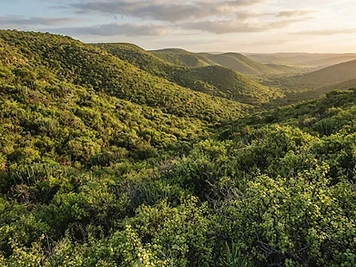
Addo Elephant National Park
Malaria-free elephant country — one of the best places on earth to see elephants in volume.

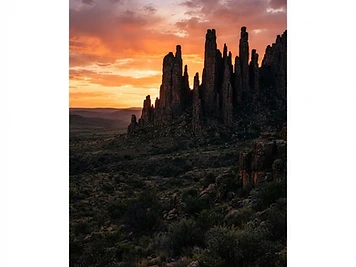
Camdeboo National Park
Surrounds Graaff-Reinet and the Valley of Desolation — kudu, springbok and Cape buffalo among dramatic Karoo columns.

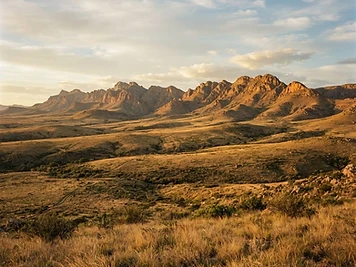
Mountain Zebra National Park
Cape mountains sanctuary for the endemic Cape mountain zebra, plus cheetah, buffalo and black rhino — malaria-free near Cradock.