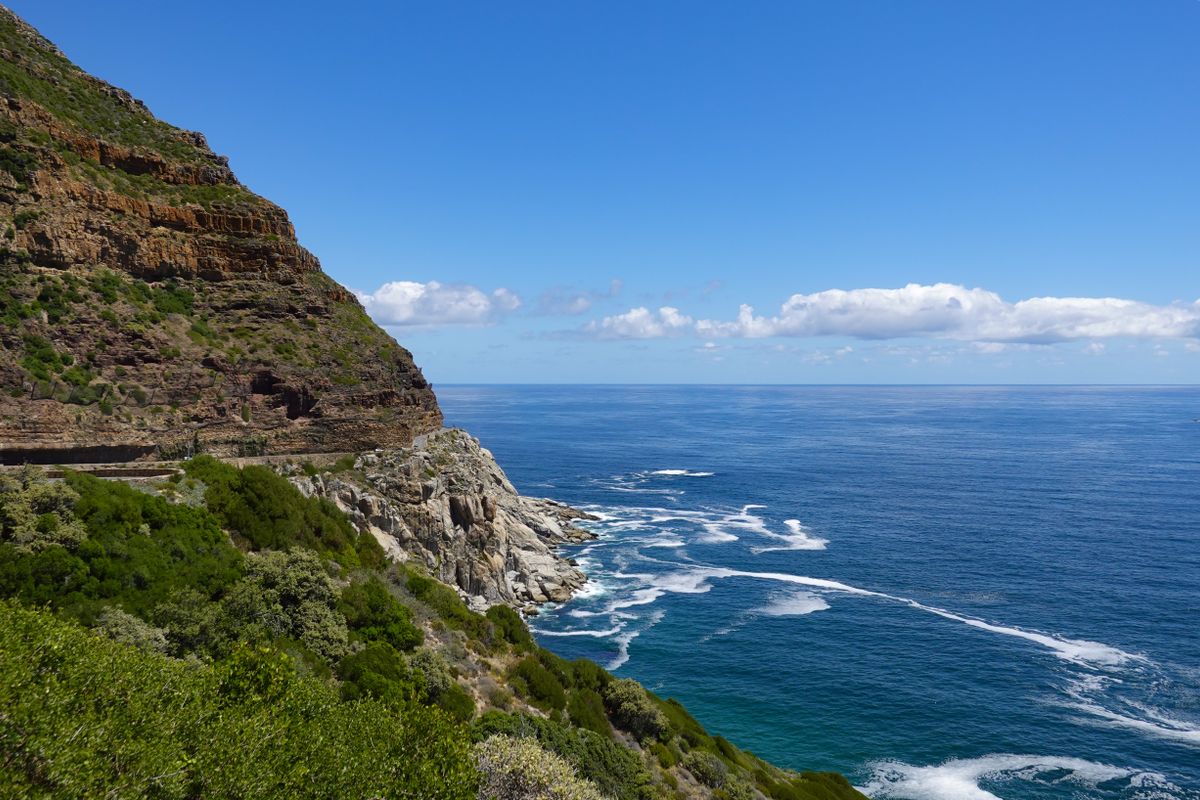
Storms River Mouth
Where the Storms River meets the Indian Ocean in Tsitsikamma — suspension bridges and forest trails.
Trip Role
Ideal stay
Best for
Our take
This is a dramatic, high-effort coastal walk that demands respect for its terrain. It is not a casual stroll, but a serious encounter with the rugged Tsitsikamma coastline that rewards those who come prepared.
This is a dramatic, high-effort coastal walk that demands respect for its terrain. It is not a casual stroll, but a serious encounter with the rugged Tsitsikamma coastline that rewards those who come prepared.
- Trip Role
- Day Trip
- Ideal Stay
- Two to four hours, depending on the chosen trail.
- Best For
- coastal scenery, forest walks, suspension bridge crossings, birding, whale watching
- Skip If
- casual strollers, people with mobility issues, those in flip-flops
- Go If
- You are a capable walker who wants to see the raw power of the Indian Ocean meeting the forest and you have the physical stamina to handle steep, uneven, and slippery coastal paths.
Why it's worth your time
The mouth trail and the suspension bridge are the easy headline; the Otter Trail starts here. Short, dramatic, and accessible to almost anyone. Dolphins and whales offshore in season.
What we love
The sheer scale of the gorge and the way the forest clings to the cliffside makes this place feel wilder than any other coastal spot on the Garden Route. The transition from dense, shaded indigenous forest to the exposed, salt-sprayed rocks of the river mouth is jarring and memorable.
What to know
The terrain is deceptive. What looks like a short walk on a map involves steep, uneven stairs and slippery boardwalks that take longer than you expect. If it has rained, the rocks become treacherous. Always carry more water than you think you need, and wear shoes with serious grip. If you are not at your turnaround point by mid-afternoon, head back immediately.
The full guide
The Route and Daily Flow
The main attraction is the Mouth Trail, a two-kilometre return walk that leads through coastal forest to the suspension bridge. The path is a mix of boardwalks and stairs that wind along the cliffside. After crossing the bridge, you can return the way you came or push up the steep climb to the lookout point for a view of the gorge. For those wanting more, the Waterfall Trail begins near the rest camp and follows the first three kilometres of the Otter Trail. This route is significantly more demanding, hugging the rocky shoreline until it reaches a waterfall. It is a linear path, meaning you must return the same way. The rest camp serves as the central hub for all these walks, providing access to parking, food, and information.
Handling the Hard Parts
The primary challenge is the footing. The coastal paths are frequently wet from salt spray and rain, making wooden boardwalks and quartzite rocks dangerously slick. The climb to the lookout point is short but exceptionally steep, requiring good cardiovascular fitness. On the Waterfall Trail, the path degrades into a chaotic scramble over large, shifting boulders. This section stops many people who are not comfortable with balance or high-impact movement. If you have a fear of heights, the suspension bridge may be intimidating, though it is stable. Always watch your step on the stairs, as they are often uneven and worn. If the wind is gusting, the exposed sections of the trail can feel precarious, so maintain a low centre of gravity and keep your hands free.
Timing and Preparation
The trails are open year-round, but the weather dictates the experience. Summer brings heat that makes the exposed sections of the Waterfall Trail exhausting, while winter offers the chance to spot whales and dolphins from the cliffs. Avoid the trails during heavy rain or high winds, as the paths become hazardous and the forest canopy offers little protection. Always carry a light rain shell, as mist and spray are constant. Pack at least one litre of water per person, even for shorter walks. Check the status of the suspension bridge before you arrive, as maintenance can lead to temporary closures. If you are planning to hike the Waterfall Trail, aim to start early to ensure you are back before the light fades under the deep cliff shadows.
Before you book
Questions Storms River Mouth always raises
- Do I need to book in advance to hike these trails?
- No, you do not need to book for the day trails. You simply pay the conservation fee at the park gate upon arrival. If you are planning to hike the full Otter Trail, that requires a separate, long-term booking.
- Is the suspension bridge always open?
- Not necessarily. The bridge undergoes periodic maintenance and reconstruction, which can lead to temporary closures. Always check the official SANParks website or contact the park office before you travel to ensure the bridge is accessible.
- Can I swim at the waterfall?
- Yes, there is a large pool at the base of the waterfall where swimming is possible. However, be mindful of the conditions, as the water can be cold and the rocks around the pool are often very slippery.
- How long does the Waterfall Trail actually take?
- While it is only six kilometres return, the technical nature of the boulder scrambling means it usually takes two to three hours. If it has rained or you are not a regular hiker, allow for extra time.
More hike in Eastern Cape

Hogsback 39 Steps Hike
A short forest walk in Hogsback to a series of cascading steps on the Tyhume River.

Otter Trail
South Africa's most famous multi-day hike — five days along the Tsitsikamma coast, booked a year ahead.

The Dolphin Trail
A 2.5-day slackpacking hike along the Tsitsikamma coast — forest, sea caves, and dolphins, with luggage moved for you.