Mapungubwe National Park
A UNESCO World Heritage site at the confluence of the Limpopo and Shashe rivers — a lost kingdom.
Trip Role
Ideal stay
Best for
Our take
A rare intersection of human heritage and wild, river-fed nature.
A rare intersection of human heritage and wild, river-fed nature.
- Trip Role
- Overnight
- Ideal Stay
- 3 days
- Time Needed
- 3 days
- Best For
- History buffs and birdwatchers.
- Go If
- You have an interest in archaeology, history, and birding in a unique riverine habitat.
Why it's worth your time
Located at the confluence of the Limpopo and Shashe rivers, this park blends ancient archaeological history with riverine forest and sandstone landscapes. It is a UNESCO World Heritage site where the remains of a lost kingdom overlook the savanna.
What we love
The treetop walkway that offers a canopy-level view of the Limpopo River.
What to know
The area is in a malaria zone; consult your doctor regarding prophylaxis.
The full guide
What it is like
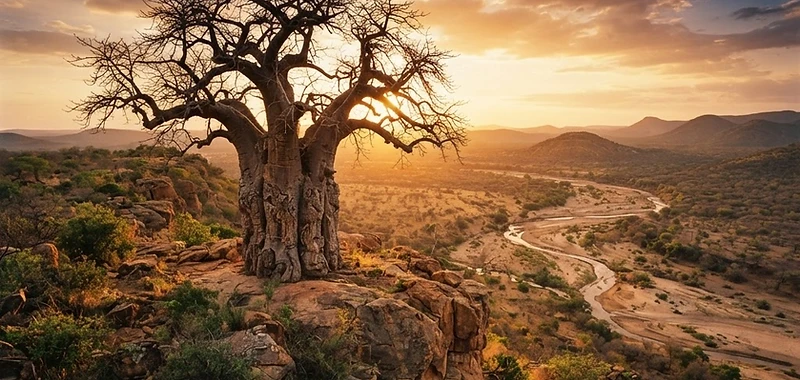
Mapungubwe feels like a relic of a different age. The terrain is dominated by harsh, red sandstone outcrops that jut sharply from the surrounding mopane scrub. The landscape is physically imposing, with massive baobabs breaking the horizon line against a sky that feels lower and heavier here than elsewhere in the country. The air carries the scent of dry dust and river silt from the Limpopo. It lacks the manicured, manic energy of the private reserves further south.
When you first arrive, the scale of the silence is what hits you. The noise of a modern, frantic world falls away, replaced by the wind rattling through the dry mopane leaves. The riverine forest lining the Limpopo provides a sharp, green contrast to the arid rocky ridges. It is a slow, ancient place. You feel the physical weight of history under your boots because the geography itself is scarred by centuries of human occupation. It is not a place for rapid-fire sightseeing; it is a place for slow observation.
Wildlife, realistically
Do not come here expecting a standard Big Five checklist. You will not find buffalo. If your primary goal is checking off lions and leopards in rapid succession, you will leave feeling frustrated. The density of large mammals is significantly lower than in the major parks to the south. You will see elephants in good numbers, especially near the river, and the sightings can be intimate because they are not constantly surrounded by a fleet of game vehicles.
Birding is the quiet star of the show. The confluence of the Limpopo and Shashe rivers creates a magnet for species that are difficult to find elsewhere. You can spend hours watching raptors or rare riverine specialists while the mammals remain sparse. Seeing predators requires genuine patience and a fair amount of luck. Sightings concentrate near the permanent water sources during the heat of the day. If you want a guaranteed parade of megafauna, this is the wrong destination for your portfolio.
How a visit works
The park operates on a system that rewards the self-reliant traveller. Self-driving is the primary way to navigate the road network, which is generally well-maintained but requires a bit of caution near the sandstone ridges. Guided game drives are available and offer a different perspective, often provided by staff who understand the historical layers of the site better than a standard ranger. Do not neglect the guided tours to the archaeological hill, as they provide the context that makes the landscape intelligible.
Three days is the ideal amount of time to settle in. One night is a waste of fuel, as you will spend the entire time rushing between the gate and the accommodation. You need time to walk the canopy-level treetop walkway and explore the different sectors of the park. Gate logistics are straightforward, but be aware that the park is spread out. You will spend a significant portion of your day in the vehicle, so pace yourself.
When to go
Choosing a season here is a trade-off between comfort and visibility. Summer months bring intense, punishing heat that can make midday activity near impossible. The vegetation is thick and lush during the rains, which is wonderful for scenery but makes tracking animals an exercise in futility. The malaria risk is also higher during the warm, wet months, and you should take medical advice seriously before planning a trip in this window.
Winter provides the most comfortable temperatures and the best game viewing. As the surface water dries up, animals are forced to congregate near the river, making them much easier to locate. The grass is beaten down and brown, which improves visibility significantly. While winter nights are surprisingly cold, the days are bright and clear. Expect more crowds during the local school holidays, which drives up the cost of accommodation and takes the edge off the solitude that defines the park.
Who it suits, who it does not
This place rewards the curious mind. If you find peace in historical context and enjoy the intersection of archaeology and geology, you will find it endlessly fascinating. It is a paradise for birders who want to escape the pressure of the big-name game reserves. The traveller who wants to sit on a rock and contemplate the flow of the river for three hours without seeing another human will find exactly what they are looking for.
It frustrates the traveller who measures a safari by the number of high-speed predator sightings per day. If you are looking for a luxury lodge experience where the wildlife is served to you on a platter, you will find the service and the sightings lacklustre here. For those who want the heavy-hitting, guaranteed Big Five experience with minimal effort, the Kruger National Park or any of the private reserves bordering it are a far better alternative. Mapungubwe demands that you bring your own enthusiasm.