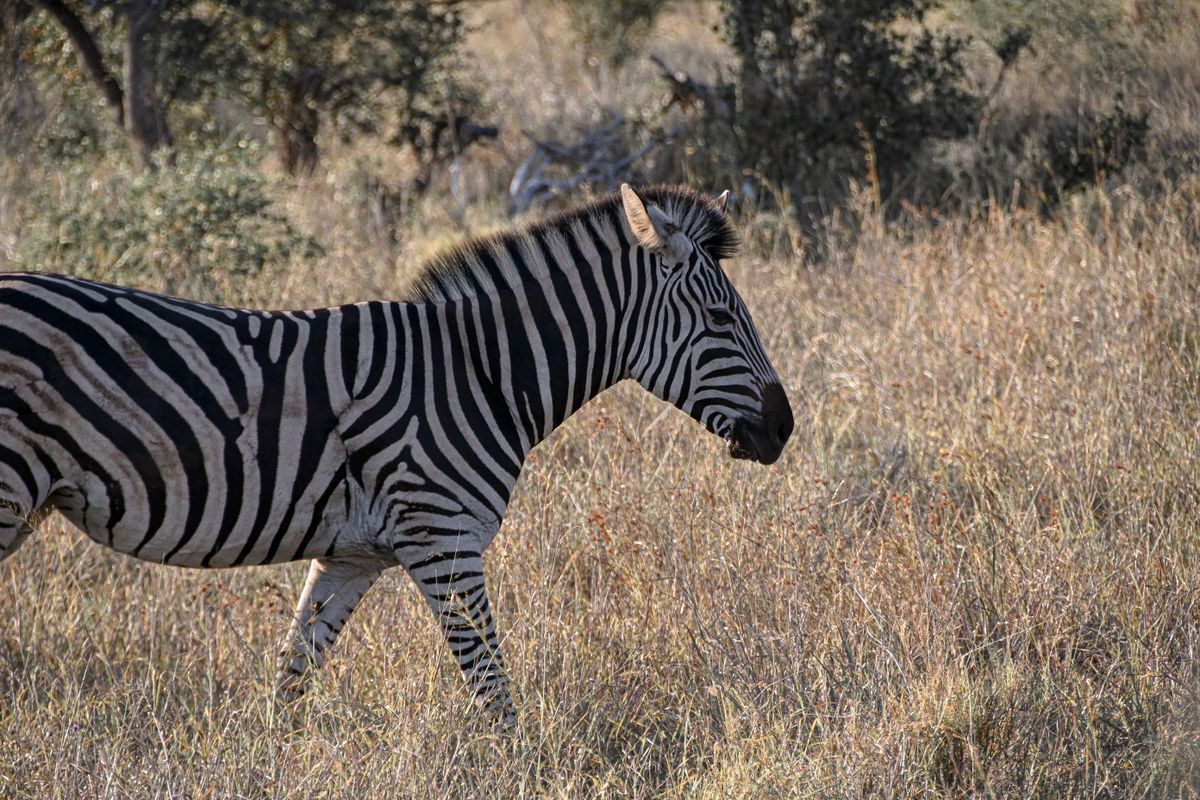
Manyeleti Game Reserve
Greater Kruger reserve between Timbavati and Sabi Sand — uncrowded, affordable Big Five on the Orpen corridor.
Trip Role
Ideal stay
Best for
Our take
The best-kept secret in the Greater Kruger, perfect for those who value solitude over luxury.
The best-kept secret in the Greater Kruger, perfect for those who value solitude over luxury.
- Trip Role
- Base
- Ideal Stay
- 3 days
- Time Needed
- 3 days
- Best For
- Uncrowded, authentic safari
- Go If
- You want a Big Five safari without the vehicle congestion found in more famous reserves.
Why it's worth your time
A community-owned reserve wedged between Timbavati and Sabi Sand, sharing the same unfenced wilderness and big-five sightings without private-reserve pricing. Fewer lodges and fewer vehicles; a quieter, less polished safari.
What we love
The feeling of having the bush to yourself, even when the sightings are world-class.
What to know
Infrastructure is more rustic compared to the neighboring private reserves.
The full guide
What it is like
Manyeleti feels different from its famous neighbours the moment you cross the border. While the Sabi Sand can feel like a busy theatre production, Manyeleti maintains the quiet atmosphere of an unpolished wilderness. The terrain is a mix of dense mopane scrub and open savanna, with the landscape absorbing the sound of your engine rather than echoing it back from a dozen other vehicles. The light here has a sharp, unfiltered quality that makes the bronze grass glow during the late afternoon. You will not find manicured lawns or sprawling commercial infrastructure. Instead, the environment is defined by its scale and silence.
After an hour on the ground, the lack of pretension becomes obvious. You are in a vast, unfenced landscape that is essentially a continuation of the Greater Kruger ecosystem, yet you rarely encounter another group. The air smells of dry earth and sun-baked wood. It lacks the polish of private reserves, but it compensates with a raw, honest energy that allows you to experience the bush without the constant intrusion of other tourists. The scale of the place is massive, making the occasional sighting feel like a genuine discovery rather than a scheduled event.
Wildlife, realistically
Expect to see the Big Five, though you must accept that nature does not keep a schedule. Because the reserve shares unfenced borders with the Timbavati and Sabi Sand, the animals move freely across invisible lines. You will likely see elephant herds and pride of lions within a few drives, but leopards remain as elusive here as they are anywhere else in the lowveld. Manyeleti has a reputation for high-quality sightings without the pressure of a dozen vehicles jostling for a better angle.
Seasonal movement dictates where the game gathers. In the drier months, sightings concentrate near the permanent water sources and river lines, where the animals are forced to congregate. You will find that smaller predators and rare antelope are genuinely difficult to locate, requiring patience and a good guide. Do not expect the animals to be habituated to the point of boredom. They behave like wild creatures, often disappearing into thickets just as you arrive. It is a genuine safari experience where you earn your viewings through persistence and field craft rather than radio chatter.
How a visit works
A visit to Manyeleti is driven by the camp you choose, as the operator dictates the flow of your day. Most visitors rely on guided game drives, which are essential for navigating the complex network of tracks. Self-drive is technically possible but limited by the rugged state of the roads and the lack of signage; you will find it frustrating if you are not experienced in bush navigation. The day follows the standard rhythm of early morning wake-up calls, a long morning drive, and a late afternoon outing that often stretches into the night to track predators.
Three nights is the ideal duration for a visit. Anything less leaves you rushing to see the geography of the reserve, while four nights might feel stagnant if you are looking for constant variety. The lodges are generally more rustic than those in neighbouring concessions, so manage your expectations regarding amenities. You are paying for the access and the solitude, not the thread count of the linens or the gourmet menu. Each lodge manages its own programme, so the degree of comfort and the quality of the guiding will vary significantly depending on where you book.
When to go
The choice of season involves a clear trade-off between visibility and comfort. The dry winter months of June through August offer the best game viewing because the vegetation is thin and water is scarce, forcing animals to be predictable. This is when the sun is mild and the nights are cold. However, this is also when the dust is at its peak and the landscape looks scorched and brown. It is a time for serious safari enthusiasts who value the hunt for animals over aesthetic appeal.
As the temperatures rise in September and October, the heat becomes oppressive, and the threat of bush fires increases. November brings the first rains, which turn the landscape into a vibrant green oasis. While birdlife and newborn animals are abundant, the tall grass makes spotting predators incredibly difficult. Crowds are rarely a problem in Manyeleti regardless of the month, which is the reserve's greatest advantage. You should factor in your budget when planning, as some operators fluctuate their rates significantly between the peak dry season and the wet shoulder periods. Decide whether you prefer the ease of seeing animals or the beauty of a lush, green landscape.
Who it suits, who it does not
Manyeleti suits the traveller who prioritises authentic wilderness over luxury amenities. If you value silence, uncrowded roads, and a genuine connection to the bush, you will find this place deeply rewarding. It attracts those who have grown tired of the commercialised, high-end safari circuit where a sighting of a lion involves twenty vehicles and a strict time limit. You will enjoy the rustic charm and the feeling that you have managed to find a secret corner of the Greater Kruger.
Conversely, it will frustrate the traveller who equates a safari with ultra-luxury lodges and seamless, five-star service. If you require air conditioning, fine dining, or polished, modern infrastructure, you will be disappointed by the modest standards here. The lack of pretension might be interpreted as a lack of quality by those who do not understand the reserve's appeal. For the luxury-focused traveller, the Sabi Sand is the better alternative, despite the crowds and the significantly higher price tag. Manyeleti is for those who are happy to trade a thread count for a wild, private encounter with the landscape.