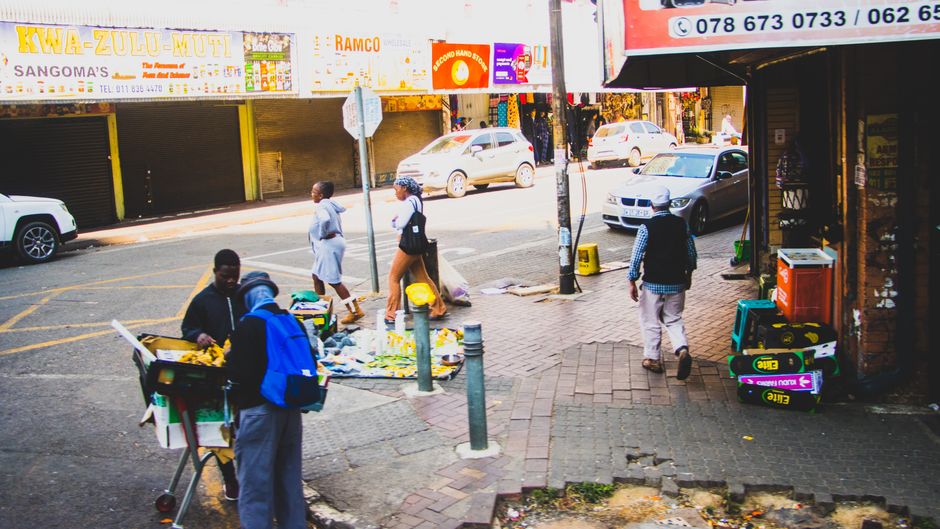
Victoria Street Market
A historic spice-and-curio market in Durban's inner city — the Indian Ocean trading coast in one covered hall.
Trip Role
Ideal stay
Best for
Our take
Victoria Street Market is a functional, tourist-facing arcade that serves as a convenient entry point to Durban’s Indian heritage. It is a reliable place for spices and curios, though it lacks the raw intensity of the city’s working markets.
Victoria Street Market is a functional, tourist-facing arcade that serves as a convenient entry point to Durban’s Indian heritage. It is a reliable place for spices and curios, though it lacks the raw intensity of the city’s working markets.
- Trip Role
- Day Trip
- Ideal Stay
- 60 to 90 minutes
- Best For
- buying bulk spices, picking up souvenirs, a quick indoor browse
- Skip If
- serious photographers, travellers seeking an authentic, non-touristy market experience
- Go If
- You want a controlled, accessible environment to buy bulk spices, incense, and souvenirs without navigating the chaotic, high-energy streets of the surrounding Indian quarter on your own.
Why it's worth your time
Durban's oldest market — spices, saris, and curios in a 19th-century arcade that's the heart of the city's Indian heritage.
What we love
The spice stalls on the ground floor offer a sensory hit that justifies the visit. You can find loose masala blends and curry powders that are far more fragrant and affordable than anything in a supermarket, and the vendors are generally happy to bag and label your selections.
What to know
The market is split into two distinct experiences. The ground floor is where the real trade happens, featuring fresh fish, meat, and the spice stalls. The upper level is almost entirely dedicated to tourist-focused crafts, jewellery, and fabrics. Bargaining is expected here, so do not accept the first price offered for any curio or textile.
The full guide
The Market Layout
The building is a two-storey structure designed with minarets that mimic a palace, but the interior is strictly utilitarian. You enter into a space that feels more like a permanent indoor shopping centre than a traditional open-air bazaar. The ground floor is the most vital part of the building, housing the fish market, fresh produce, and the spice merchants who define the market’s character. This is where you should spend your time if you want to engage with the local trade. The upper level is a quieter, more conventional retail space filled with stalls selling brassware, clothing, and various souvenirs. It is clean and easy to navigate, which makes it a comfortable choice for those who find the surrounding city streets overwhelming or difficult to manage.
Spices and Souvenirs
The primary reason to visit is the spice selection. You will find mounds of vibrant powders, from deep red chillies to golden turmeric and complex masala blends. The stallholders are knowledgeable and will often let you smell the goods before you buy. It is a straightforward process to have your choices weighed, bagged, and labelled for travel. Beyond the spices, the market is a reliable source for brass ornaments, wooden carvings, and saris. While the quality of the crafts varies, it is a convenient one-stop shop for gifts. Remember that the upper floor is geared toward international visitors, so prices are often inflated to start. Approach these stalls with the expectation that you will need to negotiate, and keep your interactions polite but firm to reach a fair price.
Fitting It Into Your Day
The market sits in the centre of Durban’s Indian quarter, making it a logical starting point for a wider walk. You can easily combine a visit here with a stop at the nearby Juma Masjid mosque or a walk through the Grey Street corridor. Because the market is tourist-facing, it requires no booking and is safe to visit during daylight hours. However, the surrounding streets can be busy and unpredictable. If you are not comfortable navigating the city centre on foot, use a ride-hailing service to get to the door. The market is best visited on a weekday morning when the stalls are fully stocked and the crowds are manageable. Avoid the temptation to linger in the area after dark; it is better to move on to your next destination once the shops begin to close.
Before you book
Questions Victoria Street Market always raises
- Is it safe to walk around the market area?
- The market itself is secure and well-trafficked. The immediate streets are busy during the day, but you should remain aware of your surroundings. Avoid walking in the area after dark and use ride-hailing services if you are unsure about the local geography.
- Do I need to book a tour to visit?
- No, you can walk through the market independently without any booking. However, if you want to understand the history of the Indian quarter or find the best spots for bunny chow in the surrounding streets, a guided food tour is a helpful way to get local context.
- What is the best thing to buy here?
- The loose spices and masala blends are the standout items. They are fresh, inexpensive, and easy to pack. The brassware and fabrics are also popular, but ensure you are happy with the quality and the price before committing to a purchase.
- Can I eat a bunny chow inside the market?
- While you might find snacks, the market is primarily for shopping. The best bunny chow is found in the curry houses and cafés along the nearby Grey Street corridor. Ask a local vendor for their favourite spot to get a truly authentic version.
More market in KwaZulu-Natal
I Heart Market
A first-Saturday-of-the-month producer market on the Durban beachfront — growers, bakers, and the KZN food crowd.
Karkloof Farmers Market
A KZN midlands Saturday market — farm produce and the midlands' weekend food table.
Shongweni Farmers Market
A Saturday-morning farmer's market on the KZN Upper Highway — the biggest growers' market in the province.