Pap
Maize-meal porridge — stiff (stywe pap) or soft — the staple carbohydrate of the country.
Ideal stay
Best for
Our take
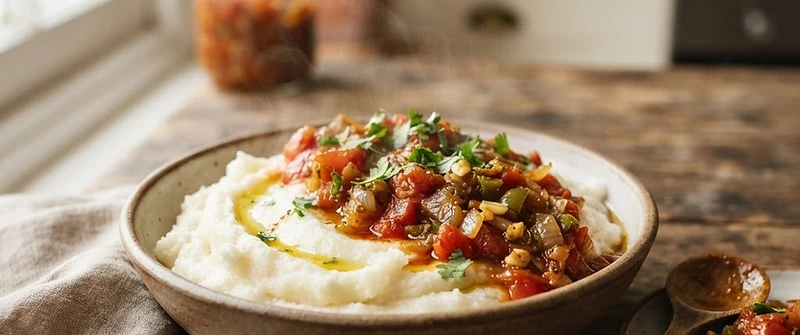
Pap is the essential, humble backbone of the South African plate. It is a neutral, comforting maize porridge that transforms into a satisfying vessel for rich gravies, smoky grilled meats, and spicy vegetable relishes.
Pap is the essential, humble backbone of the South African plate. It is a neutral, comforting maize porridge that transforms into a satisfying vessel for rich gravies, smoky grilled meats, and spicy vegetable relishes.
- Ideal Stay
- 30 to 60 minutes per meal
- Best For
- shisa nyama, braai culture, affordable local staples, hands-on eating
- Skip If
- low-carb diets, those seeking complex standalone flavours
- Go If
- You want to understand the daily rhythm of South African eating. It is for the traveller who prioritises local staples over fine dining and wants to experience a proper shisa nyama.
Why it's worth your time
Maize meal arrived with Portuguese traders and became the country's default carbohydrate, eaten from townships to braais to breakfast tables. Stiff 'stywe pap' is the braai version — shaped with the hand, used to scoop gravy and chakalaka. Soft pap is breakfast, with milk and sugar. It's the silent partner of nearly every South African meal, and the dish most visitors underrate until they've mopped a plate of lamb gravy with it at a township shisa nyama.
What we love
The way pap acts as a functional tool rather than just a side dish. At a shisa nyama, you use your hands to roll the stiff, warm maize into a ball, creating a perfect, edible scoop for thick lamb gravy or spicy chakalaka.
What to know
Pap is not one single dish but a spectrum of textures. You will encounter soft, runny porridge at breakfast, dense stywe pap with dinner, and dry, crumbly phutu at a braai. Always check the menu or ask the server which version is being served, as the texture dictates how you should eat it.
The full guide
Understanding the Texture
Pap is maize meal cooked in boiling water with a pinch of salt. The final texture depends entirely on the ratio of water to meal and the cooking method. Stywe pap is the most common version you will encounter in restaurants; it is firm, dense, and holds its shape on the plate. It is designed to be eaten with a fork or your hands to mop up stews. Krummelpap, or phutu, is cooked to be dry and crumbly, resembling grains of couscous. This version is the standard companion for a braai, where it sits alongside grilled boerewors and tomato-based sauces. If you order pap for breakfast, expect a soft, runny porridge served with milk and sugar, which functions much like oatmeal. Never assume one texture is a mistake; they are distinct preparations for different times of day.
The Ritual of the Braai
The most authentic way to meet pap is at a braai or a shisa nyama. In these settings, the pap is not a garnish but a central component of the social ritual. It is almost always served with a sous, a rich tomato and onion gravy, or chakalaka, a spicy vegetable relish. The combination of the neutral, warm maize and the intense, savoury sauce is the definition of South African comfort food. When eating in a township or at a casual grill house, do not be afraid to use your hands. Pinch off a small piece of the stiff pap, roll it into a ball with your palm, and use it to scoop up the meat and gravy. This is the standard way to eat, and it is the most effective way to balance the flavours.
Where to Find It
You will find pap everywhere, from high-end restaurants to roadside stalls and supermarket deli counters. For the most honest experience, seek out a shisa nyama, where the meat is cooked over an open fire and the pap is served fresh from the pot. The smoky flavour of the wood fire often permeates the kitchen, adding a depth to the maize that you will not find in a commercial kitchen. If you are staying in a city, look for local eateries that specialise in traditional dishes. Avoid places that treat pap as an afterthought or a cold, pre-portioned block. A good portion of pap should be served hot and fresh. If you are unsure about the quality, ask if it was cooked recently. The best pap is always the one that has just left the heat.
Before you book
Questions Pap always raises
- Is pap the same as polenta?
- No. While both are made from maize, they are different products. Pap is made from white maize meal, which has a different grind and flavour profile than the yellow cornmeal used for Italian polenta. They are not interchangeable in recipes.
- How do I eat stiff pap?
- Use your right hand. Pinch off a small, bite-sized piece of the pap, roll it into a ball in your palm, and use it to scoop up your meat, gravy, or vegetables. It is a functional, hands-on way to eat that ensures you get a bit of everything in one bite.
- What does pap taste like?
- On its own, pap is very mild and faintly sweet, with a soft, comforting texture. It is designed to be a neutral base, meaning it has very little flavour by itself. Its purpose is to carry the stronger, saltier, or spicier flavours of the accompanying stews and sauces.
- Can I eat pap at any time of day?
- Yes. It is a versatile staple eaten throughout the day. You will find it as a soft, sweet breakfast porridge with milk and sugar, or as a savoury, stiff side dish served with meat and vegetables for lunch or dinner.