Magwinya
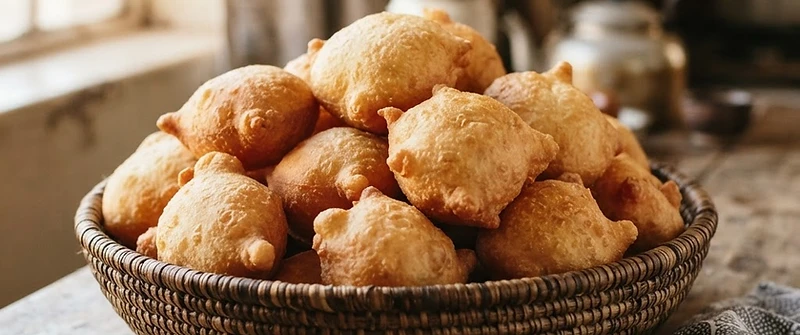
Fried dough 'fat cakes' — a popular township and rural snack, eaten with relish or mince.
Ideal stay
Best for
Our take
Magwinya is the essential, unpretentious fuel of the South African street. When pulled fresh from the oil, these golden, airy dough balls are a masterclass in simple, satisfying comfort that puts most commercial pastries to shame.
Magwinya is the essential, unpretentious fuel of the South African street. When pulled fresh from the oil, these golden, airy dough balls are a masterclass in simple, satisfying comfort that puts most commercial pastries to shame.
- Ideal Stay
- 10 to 20 minutes, plus the time to find a vendor
- Best For
- cheap street food, authentic local flavour, quick breakfast, community connection
- Skip If
- calorie-conscious diners, formal sit-down meals, those avoiding fried foods
- Go If
- You are a traveller who prioritises local, everyday food over polished dining. You want a cheap, authentic breakfast or snack that connects you directly to the rhythm of the street and the local economy.
Why it's worth your time
The township and rural cousin of vetkoek — hot, airy fried dough, sold from corner vendors and roadside stands. Its roots run across Southern Africa, where frying dough is a near-universal tradition. Eaten plain, with Russian sausage, with mince, or with a slick of chakalaka, it's cheap fuel that shows up wherever people gather. Buy it where it's fried in front of you; the stale, reheated version isn't worth it.
What we love
The contrast between the crisp, golden exterior and the pillowy, slightly chewy interior is unmatched. Unlike mass-produced doughnuts, a proper magwinya has a subtle, yeasty depth that feels substantial. It is honest food that does not try to be anything other than what it is: hot, fresh, and filling.
What to know
Always buy them where you can see the vendor frying them in front of you. If they are sitting in a pile, they are likely cold and greasy. A good magwinya should be served warm. If you are ordering a savoury filling, expect a generous, messy portion of curried mince or polony that requires two hands to manage.
The full guide
The anatomy of the perfect fat cake
At its core, magwinya is a simple leavened wheat dough, fried until it puffs into a golden sphere. The magic lies in the texture. A well-made specimen is crisp on the outside with a soft, airy, and slightly chewy centre. If the dough is under-proofed, the result is dense and heavy. If the oil temperature is too low, the dough absorbs too much fat, leaving you with a greasy, unappealing mess. You are looking for a light, golden-brown crust that shatters slightly when you bite into it. The flavour should be neutral and yeasty, providing a blank canvas for whatever you choose to pair it with. Avoid any version that looks pale or feels oily to the touch, as these are signs of poor technique or old oil.
Navigating the street-side experience
You will find these sold at roadside stands, taxi ranks, and small spaza shops. The setting is rarely formal; expect to eat standing up or while walking. The best vendors are those who work in small batches, ensuring a steady supply of fresh product throughout the morning. When you approach a stand, look for the tell-tale signs of a busy operation: a queue of locals and the smell of fresh frying oil. If the vendor is pulling them straight from the pot, you have found the right place. Do not be intimidated by the simplicity of the transaction. You can order them plain, or ask for them to be split and stuffed with fillings like curried mince, polony, or a slick of spicy atchar.
Regional names and cultural context
You will hear this dish called by many names depending on where you are and who you are talking to. In Afrikaans-speaking areas, it is almost universally known as vetkoek. In many Nguni-language communities and across the border in Botswana, magwinya or amagwinya is the standard term. While the names vary, the cultural role remains consistent. It is a staple of the informal economy, providing an affordable, high-energy meal for commuters, students, and workers. It is not a dish that seeks recognition or awards; it is a functional, beloved part of daily life. Understanding that this is a shared heritage across Southern Africa helps you appreciate why it appears in so many different contexts, from quick morning breakfasts to weekend church events.
Before you book
Questions Magwinya always raises
- Is magwinya the same as a doughnut?
- No. While both are deep-fried dough, magwinya is typically savoury and lacks the heavy sugar coating or glaze of a standard doughnut. It is closer to a fried bread roll that serves as a vessel for savoury fillings like mince or cheese.
- Can I eat magwinya if I am vegetarian?
- Yes, provided you order it plain. The basic dough is made from flour, yeast, sugar, salt, and water. It only becomes non-vegetarian when you add meat fillings like curried mince or polony. Always confirm with the vendor if they use lard or vegetable oil for frying.
- What is the best way to eat it?
- Eat it while it is hot. If you are having it as a meal, ask for it to be split and filled with curried mince or atchar. If you prefer a snack, eat it plain or with a little jam or syrup, similar to how you might eat a scone.
- Why is it sometimes called a fat cake?
- It is a literal description of the dish. Because it is deep-fried, it is calorie-dense and filling, which earned it the nickname fat cake in English-speaking circles. It is a term of endearment for a food that provides significant energy for a very low price.