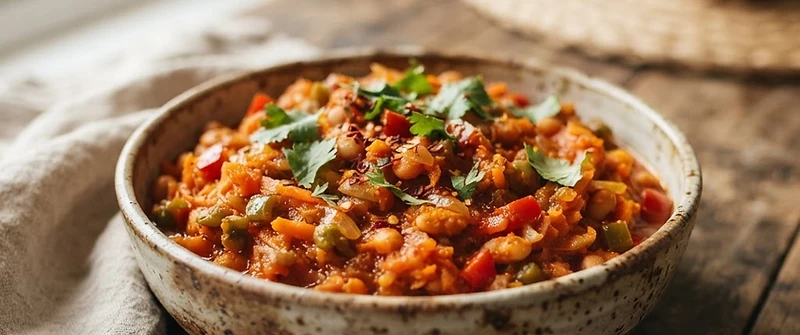
Chakalaka
A spicy relish of onion, tomato, carrot and beans — the township staple that goes with everything.
Ideal stay
Best for
Our take
Chakalaka is the essential South African vegetable relish, a spicy, humble, and deeply satisfying staple. It is the perfect, vibrant companion to grilled meat and maize porridge, defining the flavour of a proper local braai.
Chakalaka is the essential South African vegetable relish, a spicy, humble, and deeply satisfying staple. It is the perfect, vibrant companion to grilled meat and maize porridge, defining the flavour of a proper local braai.
- Ideal Stay
- 15 to 30 minutes, as part of a meal
- Best For
- a traditional braai, pairing with pap, authentic township food experiences
- Skip If
- those avoiding spice, diners seeking delicate or subtle flavours
- Go If
- You are visiting a shisa nyama or a local township eatery and want to eat exactly what the locals are eating. It is the mandatory side dish for any serious barbecue.
Why it's worth your time
It began in Johannesburg's mine hostels and townships, where Mozambican and local workers cooked a relish from whatever was at hand — onion, tomato, carrot, beans. It spread fast because it was cheap, kept, and made plain food taste alive. Now it's the country's default relish, sold in jars at every supermarket and heaped beside every braai. The fresh version at a shisa nyama is the one worth crossing the street for.
What we love
The way it transforms plain, starchy pap into a complete meal. It is a masterclass in resourcefulness, turning simple tinned beans, onions, and carrots into a complex, tangy, and spicy condiment that holds its own against the smokiness of fire-grilled meat.
What to know
Expect the heat level to vary wildly depending on the cook. While it is often served cold, many prefer it warm. It is not a main course, but a condiment meant to be heaped onto your plate alongside your starch and protein. Always check if it contains meat stock if you are vegetarian.
The full guide
The flavour profile
Chakalaka is a spicy, chunky vegetable relish that balances tanginess with a distinct curry heat. At its core, it relies on a base of onions, tomatoes, carrots, and peppers, often bound together with baked beans in tomato sauce. The texture is thick and saucy, providing a necessary contrast to the dry, crumbly nature of pap. You should taste the sweetness of the carrots and beans immediately followed by the sharp, lingering warmth of chilli and curry powder. Because it originated in the mining hostels of Johannesburg, the recipe is inherently flexible. Some versions are fiery and heavy on the peppers, while others are milder and sweeter. It is a dish that prioritises flavour and utility over presentation, making it a reliable, punchy addition to any plate.
Serving and pairing
You will almost always find chakalaka served alongside pap, the ubiquitous South African maize porridge. The two are inseparable at a braai, where the relish cuts through the richness of boerewors, lamb chops, or grilled chicken. It is also commonly scooped up with fresh bread or used as a topping for stews. While you can find it in jars at any supermarket, the fresh version prepared at a shisa nyama is superior. The vegetables retain a slight crunch, and the spices are more vibrant. It is equally acceptable to eat it hot or cold, though many locals argue that the flavours deepen and improve if left to sit overnight. When ordering, treat it as the essential bridge between your starch and your meat, ensuring every bite of your meal is coated in its spicy sauce.
Meeting the dish
Finding chakalaka is easy, as it is present at almost every casual eatery and social gathering in the country. If you are in Johannesburg or Soweto, look for a local shisa nyama where the meat is braaied over an open fire. This is the most authentic setting to experience the dish. Avoid the mass-produced, overly vinegary versions found in some convenience stores if you want to understand why this dish is a national favourite. Instead, ask for the house-made relish. If you are invited to a private braai, you will likely see a large bowl of it sitting on the table. Do not hesitate to pile a generous spoonful onto your plate. It is a communal food, meant to be shared and enjoyed in the company of others, reflecting the social spirit of the South African table.
Before you book
Questions Chakalaka always raises
- Is chakalaka always vegetarian?
- The traditional recipe is entirely vegetable-based and uses baked beans for protein. However, some cooks may use meat stock for extra flavour. If you are strictly vegetarian, it is always worth asking the server or host to confirm the ingredients before you dig in.
- Can I eat chakalaka on its own?
- While you can technically eat it by itself, it is designed as a condiment. It is far too intense and spicy to be a main dish. It is best enjoyed as a side, mixed into mouthfuls of pap or served alongside grilled meats to balance the flavours.
- Is chakalaka very spicy?
- The heat level varies significantly depending on the cook and the region. Some versions are mild and sweet, while others are fiery with fresh chillies and heavy curry powder. If you are sensitive to spice, start with a small amount to test the heat before committing to a large serving.
- Should I serve it hot or cold?
- Both are acceptable. Many people prefer it cold, especially on a hot day at a braai, as the flavours have time to meld. Others prefer it warm, particularly when served with freshly cooked pap. There is no wrong way to serve it, so choose based on your preference.