Braai / Shisa Nyama
The South African cookout — meat over open coals, from a backyard braai to a township shisa nyama, and the country's social ritual.
Ideal stay
Best for
Our take
Braai and shisa nyama are the essential social rituals of South Africa. Whether a backyard gathering or a bustling township grill, this is honest, fire-cooked meat that demands patience, good company, and a complete lack of pretension.
Braai and shisa nyama are the essential social rituals of South Africa. Whether a backyard gathering or a bustling township grill, this is honest, fire-cooked meat that demands patience, good company, and a complete lack of pretension.
- Ideal Stay
- Two to four hours, including the socialising.
- Best For
- communal dining, authentic local culture, fire-grilled meat, social atmosphere
- Skip If
- formal dining, vegetarians, those seeking quiet, solo travellers
- Go If
- You want to understand the social fabric of the country. It suits travellers who value atmosphere over white-tablecloth service and who are willing to eat with their hands in a loud, communal setting.
Why it's worth your time
Two names for the same ritual. 'Braai' is Afrikaner; 'shisa nyama' is Zulu — literally 'burn the meat' — and belongs to the township tradition where a butcher's counter doubles as a grill. For a visitor, a township shisa nyama is the truer experience: you pick your meat raw, they cook it over coals, and you eat it standing with the locals. Mzoli's in Gugulethu, Cape Town, is the famous version; a backyard braai anywhere is the everyday one.
What we love
The absolute lack of hierarchy. At a shisa nyama, the fire is the great equaliser. You stand in the same queue as everyone else, the smoke smells the same on your clothes regardless of your job, and the focus remains entirely on the quality of the meat and the rhythm of the music.
What to know
Order your meat by weight at the butchery counter, not by the dish name. The braai master handles the fire and the timing; do not attempt to intervene or offer advice, as this is considered poor etiquette. Expect to wait for your food, as the coals take time to reach the right temperature. Bring cash, as many informal spots do not accept cards.
The full guide
The Ritual of the Fire
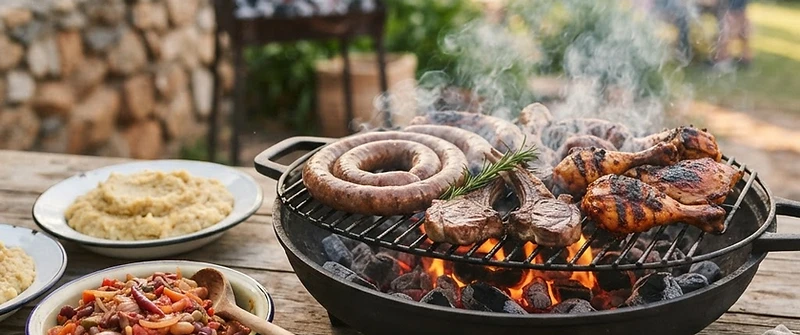
A braai is defined by the use of wood or charcoal, never gas. The process is slow and deliberate, governed by strict social codes. In a home setting, the braai master is the undisputed authority over the fire, and guests should stay clear of the grill. In a township shisa nyama, the butcher acts as the gatekeeper, providing fresh cuts that are then handed to the grill team. The meat is typically fatty to ensure it stays moist over the intense heat. You will find boerewors, a spiced, coiled sausage, alongside lamb chops, beef, and chicken. The goal is not a quick sear but a deep, smoky flavour that only comes from patience. If you are not greeted by thick plumes of smoke upon arrival, you are likely in the wrong place.
Sides and Setting
The meat is the star, but the sides provide the necessary balance. You will almost always be served pap, a thick, white maize-meal porridge that acts as a neutral base for the rich, fatty meat. Chakalaka, a spicy relish made from onions, peppers, carrots, and beans, is the essential accompaniment, providing the heat and acidity needed to cut through the smoke. Depending on the establishment, you might also find potato salad, coleslaw, or grilled sweetcorn. The setting is intentionally informal. Expect wooden benches, plastic chairs, and a communal atmosphere where music plays a central role. It is loud, vibrant, and often crowded. Do not expect a quiet corner; the noise is part of the experience, reflecting the communal spirit that defines the tradition across the country.
Navigating the Experience
For a visitor, the most authentic way to experience this is through a guided township tour. While you can find braai spots in many areas, a guide provides context and ensures you are visiting established, welcoming venues. If you choose to go alone, stick to well-known spots and visit during daylight hours. Always check the local travel advice for the specific area before heading out. When you arrive, head straight to the butchery counter to select your raw meat. Pay for it, then take it to the braai area. Keep your receipt, as you will need it to claim your cooked order. Be prepared for a wait, as the fire dictates the pace. Use this time to order a drink, listen to the music, and observe the local crowd.
Before you book
Questions Braai / Shisa Nyama always raises
- Is it safe for a tourist to visit a shisa nyama?
- Yes, provided you use common sense. Many popular spots in townships are accustomed to visitors. The safest and most rewarding approach is to join a guided food tour, which handles logistics and provides local context, allowing you to focus on the food and the atmosphere without navigating the area alone.
- What is the difference between a braai and a shisa nyama?
- They are essentially the same ritual. Braai is the Afrikaans term for the social event of grilling over fire. Shisa nyama is the Zulu term, specifically referring to the township tradition where you buy raw meat from a butcher and have it grilled on-site at the establishment.
- Do I need to bring my own meat?
- At a commercial shisa nyama, you buy the meat directly from the on-site butchery. At a private home braai, it is common to bring your own meat and drinks, a practice often called a bring-and-braai. Always clarify the expectations if you are invited to a private home.
- Are there vegetarian options available?
- Vegetarian options are limited. While some establishments offer salads, grilled vegetables, or pap and chakalaka, the entire culture is built around meat. If you are vegetarian, you will likely find the experience restrictive, as the grill is almost exclusively used for beef, lamb, pork, and chicken.