Biltong
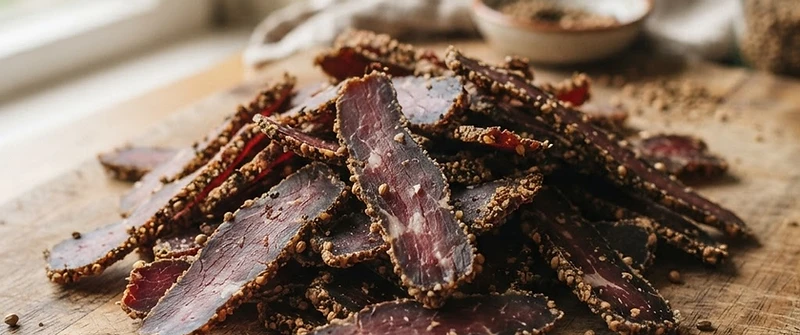
Air-dried, vinegar-cured meat — beef most often — cut into chewy strips. The country's universal snack.
Ideal stay
Best for
Our take
Biltong is the essential South African snack, a sophisticated, vinegar-cured meat that rewards those who seek out a proper butchery. It is a masterclass in texture and spice, far superior to any mass-produced, heat-dried alternative.
Biltong is the essential South African snack, a sophisticated, vinegar-cured meat that rewards those who seek out a proper butchery. It is a masterclass in texture and spice, far superior to any mass-produced, heat-dried alternative.
- Ideal Stay
- 15 to 30 minutes at a butchery
- Best For
- road trips, casual social gatherings, authentic local flavour, high-protein snacking
- Skip If
- vegetarians, those seeking a soft or cooked meat experience
- Go If
- You are a traveller who values local food culture and wants a high-protein, portable snack for long drives through the Karoo or afternoons spent watching a game of rugby or cricket.
Why it's worth your time
The practice of drying meat predates European settlement — the Khoekhoe and San cured game in the wind and sun long before the first Dutch ships landed. The Voortrekkers adopted it for the Great Trek, and the name comes from the Dutch bil (rump) and tong (strip). Today it's the country's universal snack, made from beef most often, though game and ostrich are common. Buy it from a proper butchery, not a supermarket packet: it should be dry outside, still moist inside, and heavy on the pepper. Atlas Trading in Cape Town's Bo-Kaap is a reliable stop.
What we love
The sheer variety of the experience. You can choose between lean, dry pieces or fatty, wet strips that yield under pressure. It is not just a snack; it is a conversation with the butcher about your personal preference for spice, fat content, and moisture levels.
What to know
Avoid supermarket packets. Find a local butchery where the meat hangs in plain sight. Ask for a taste before you buy. You will need to specify if you want it wet or dry, and whether you prefer beef, ostrich, or game like kudu or springbok.
The full guide
The anatomy of the snack
Biltong is air-dried, vinegar-cured meat, typically beef, though game like kudu, springbok, and ostrich are common. The name derives from the Dutch words for rump and strip. Unlike jerky, which is sliced thin and cooked, biltong is cured slowly in a mixture of salt, pepper, and coriander, then hung to dry in cool, moving air. This process preserves the integrity of the meat, leaving it with a dense, cured-ham quality rather than a dehydrated, leathery one. A well-made piece should have a firm, dark exterior and a moist, rosy centre. The fat is a critical indicator of quality; look for a golden, even layer rather than white, waxy fat. The flavour profile is defined by the balance of salt, the sharp tang of vinegar, and the aromatic, earthy punch of toasted coriander seeds.
Ordering and consumption
When you enter a butchery, treat the purchase as a consultation. The staff will expect you to have an opinion. Ask for a sample to determine the moisture level that suits you. Wet biltong is softer and more flavourful, while dry biltong is firmer and chewier. You can buy it in whole sticks to slice yourself with a pocket knife, or have it sliced by the machine behind the counter. It is traditionally eaten on its own, perhaps with an ice-cold beer or a glass of red wine, such as a Pinotage. It is a staple at any braai, where it serves as a precursor to the main event. If you are buying for a road trip, ask for a mix of lean and fatty pieces to keep your palate interested over long kilometres.
Where to find the best
The best biltong is never found in a plastic bag at a petrol station. Seek out independent butcheries in small towns or established city markets. These places take pride in their spice blends and their drying rooms. If you are driving through the interior, look for signs advertising biltong at local farm stalls or butcheries near the main routes. The quality varies by operator, so trust your eyes and your nose. If the meat looks grey or smells overly acidic, keep moving. A good butcher will be happy to explain their process and let you choose your specific cut from the hanging rack. This interaction is part of the ritual. If you find a place that treats the meat with respect, buy more than you think you need, as it disappears quickly.
Before you book
Questions Biltong always raises
- Is biltong the same as beef jerky?
- No. Jerky is sliced thin before drying and is often smoked or cooked at low heat. Biltong is cured in vinegar and spices, then air-dried in larger pieces. This creates a softer, more tender texture and a deeper, more complex flavour profile that is distinct from jerky.
- What is the best way to eat biltong?
- Eat it as it is, sliced thinly or in bite-sized chunks. It is best enjoyed as a snack on its own, perhaps paired with a cold beer or a glass of red wine. Some people also enjoy it sliced thinly on fresh bread or added to traditional dishes like potjiekos.
- Should I buy biltong from a supermarket?
- Avoid supermarket packets if you want the real experience. They are often mass-produced and lack the texture and flavour of fresh, artisanal biltong. Always visit a local butchery where you can see the meat hanging and choose the specific moisture and fat level you prefer.
- Is biltong always made from beef?
- While beef is the most common, biltong is frequently made from game meats like kudu, springbok, and ostrich. These game versions are often leaner and have a more intense, earthy flavour. Always ask the butcher what species is being used if you are unsure.